
Last updated November 23, 2026
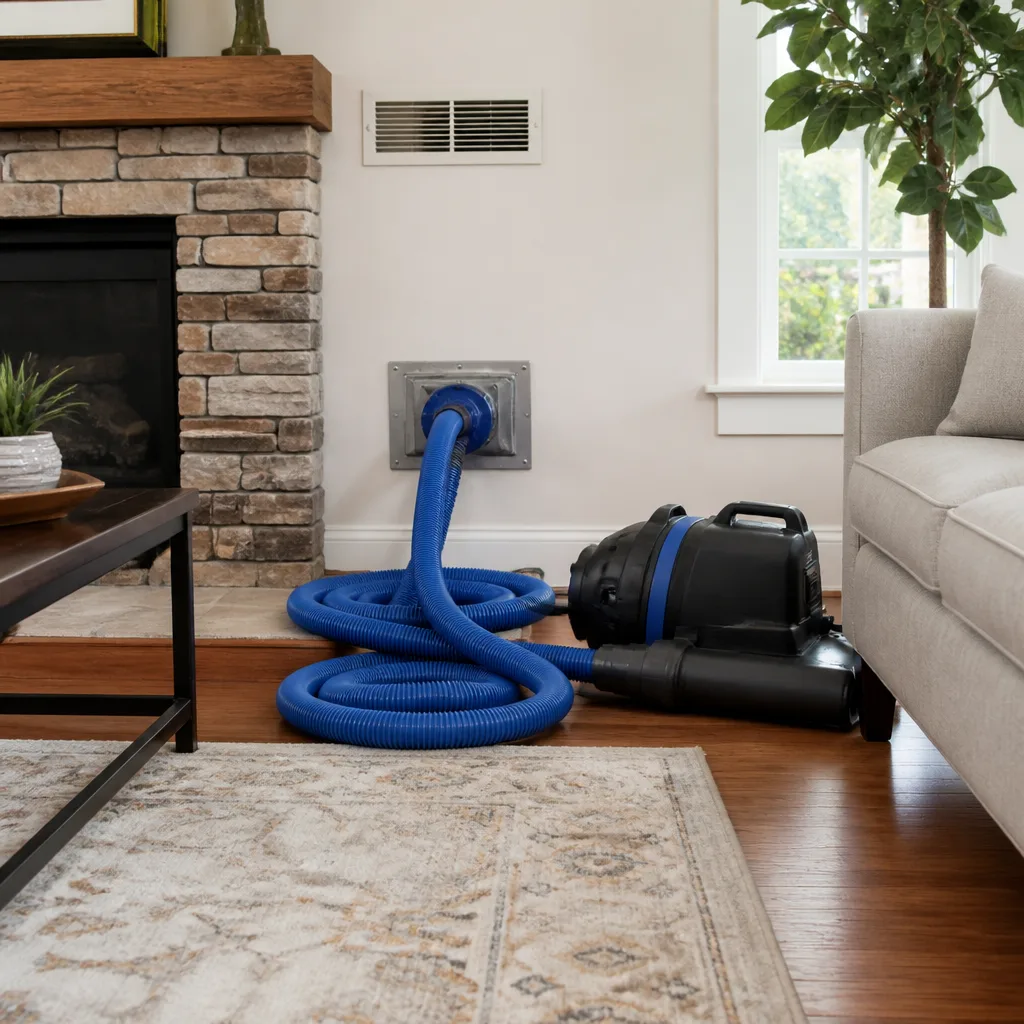 Whole-home duct cleaning
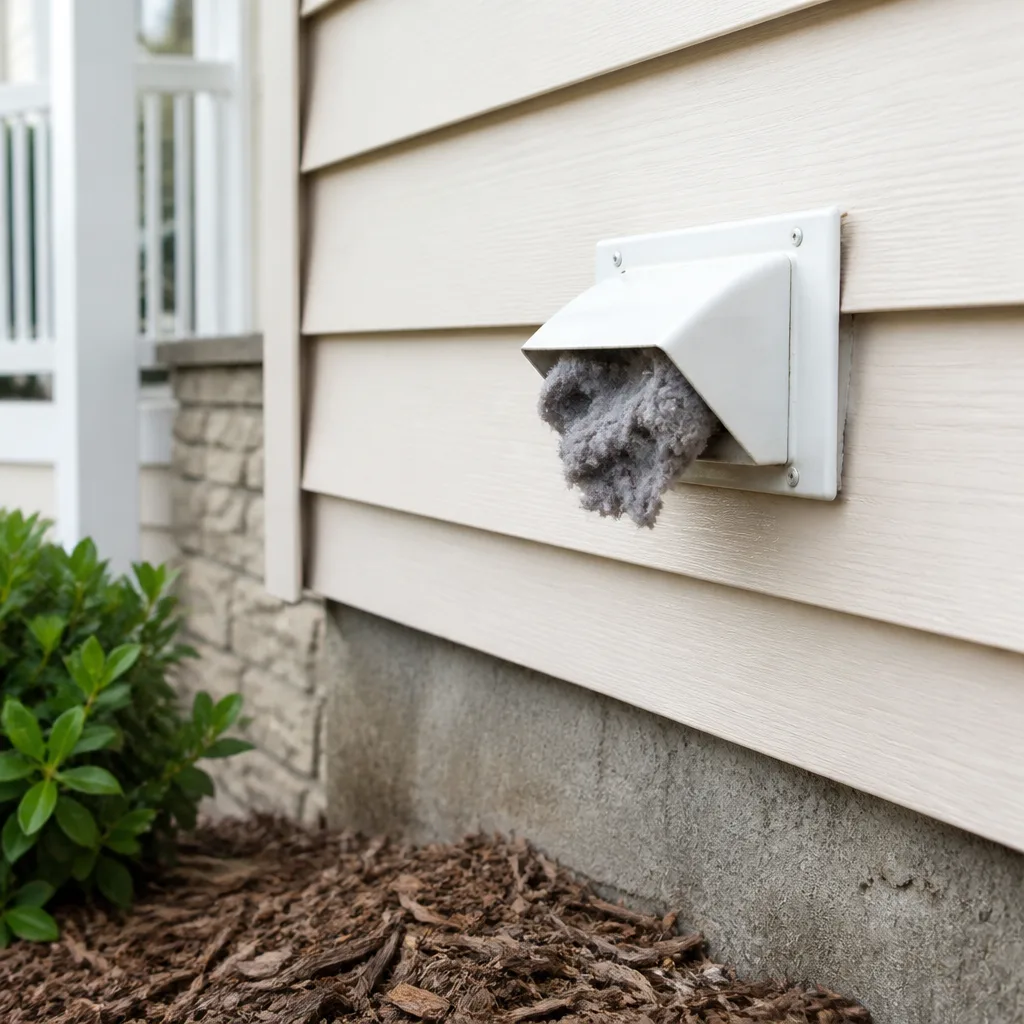 Dryer vent cleaning
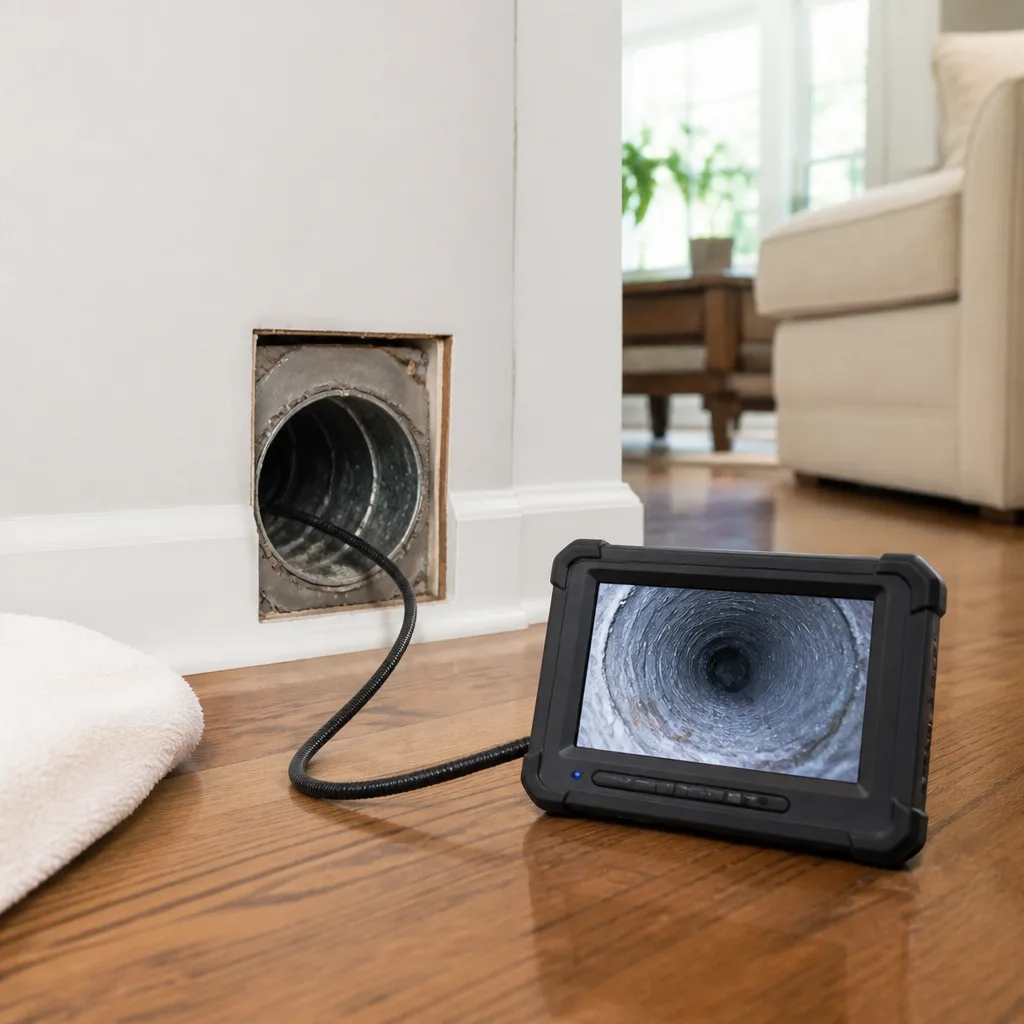 Camera inspection
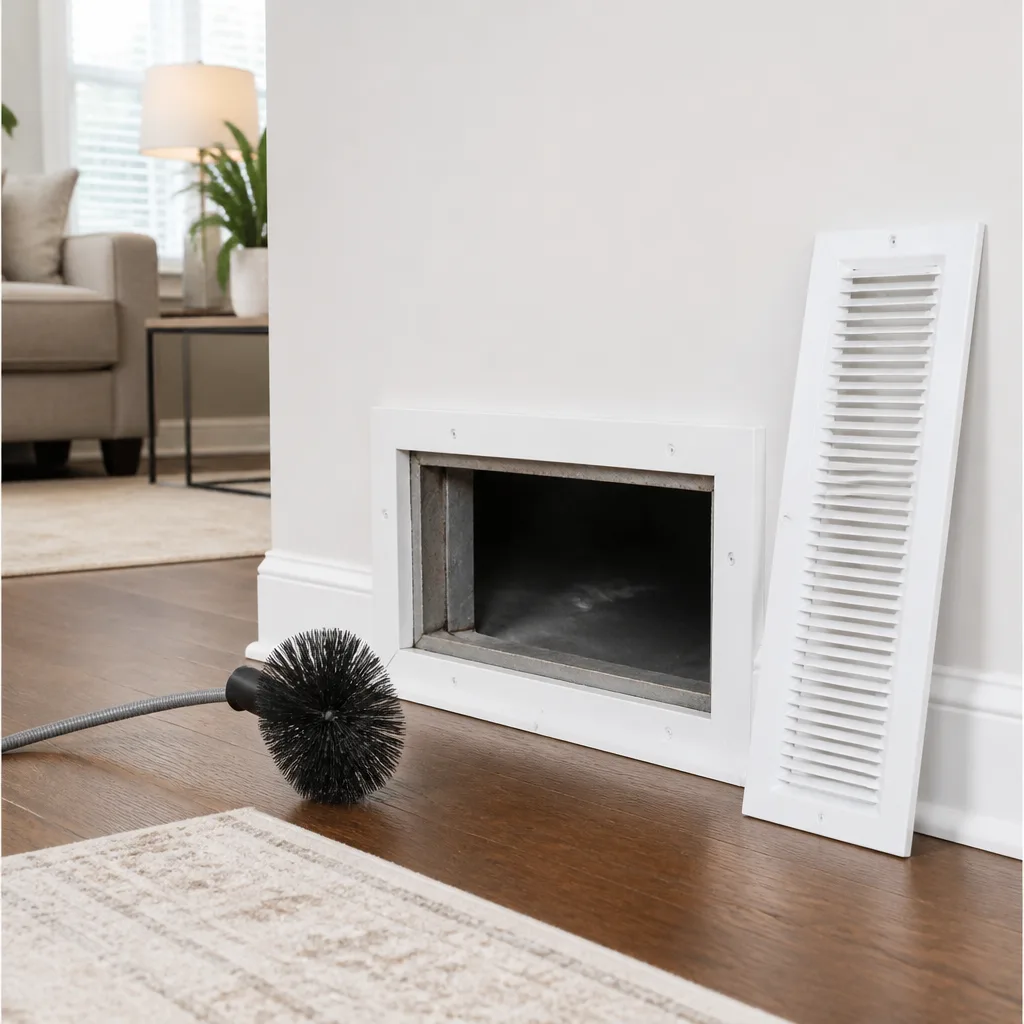 Sanitizing & deodorizing
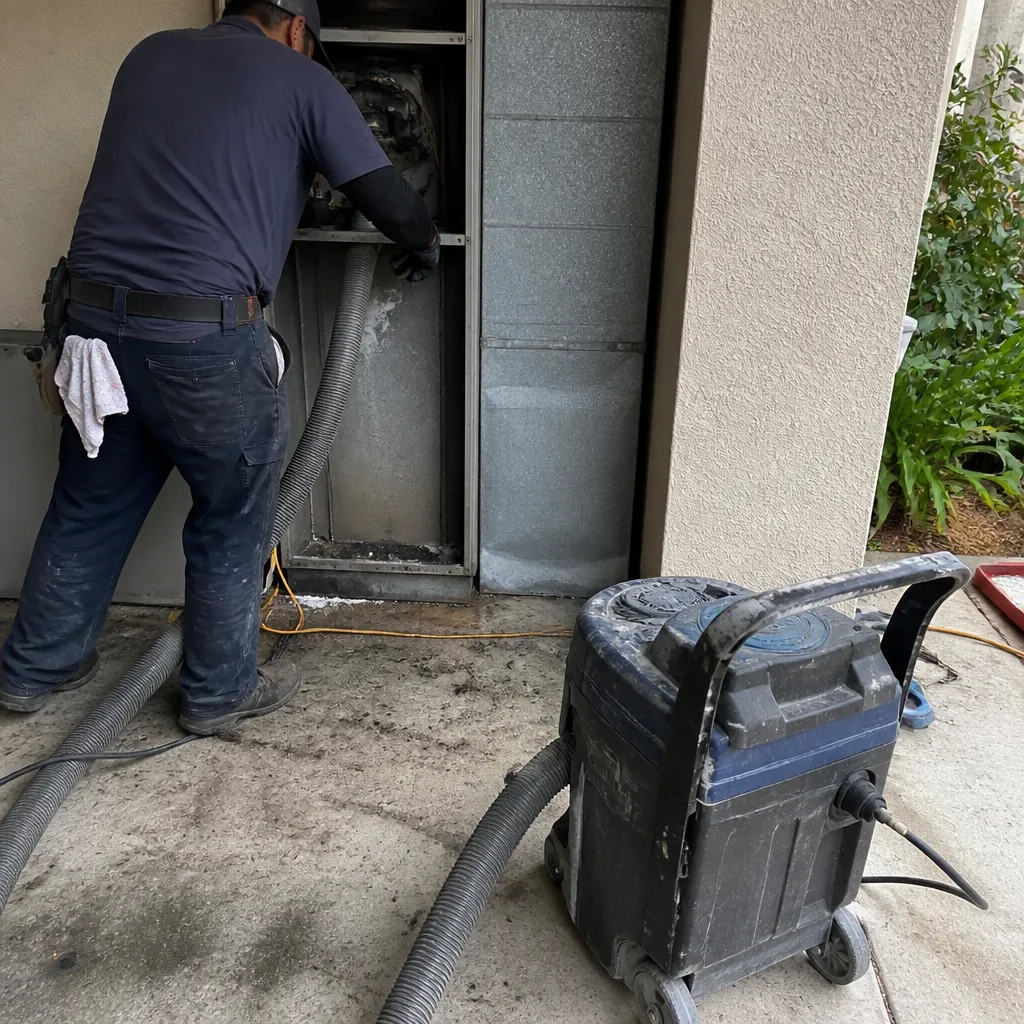
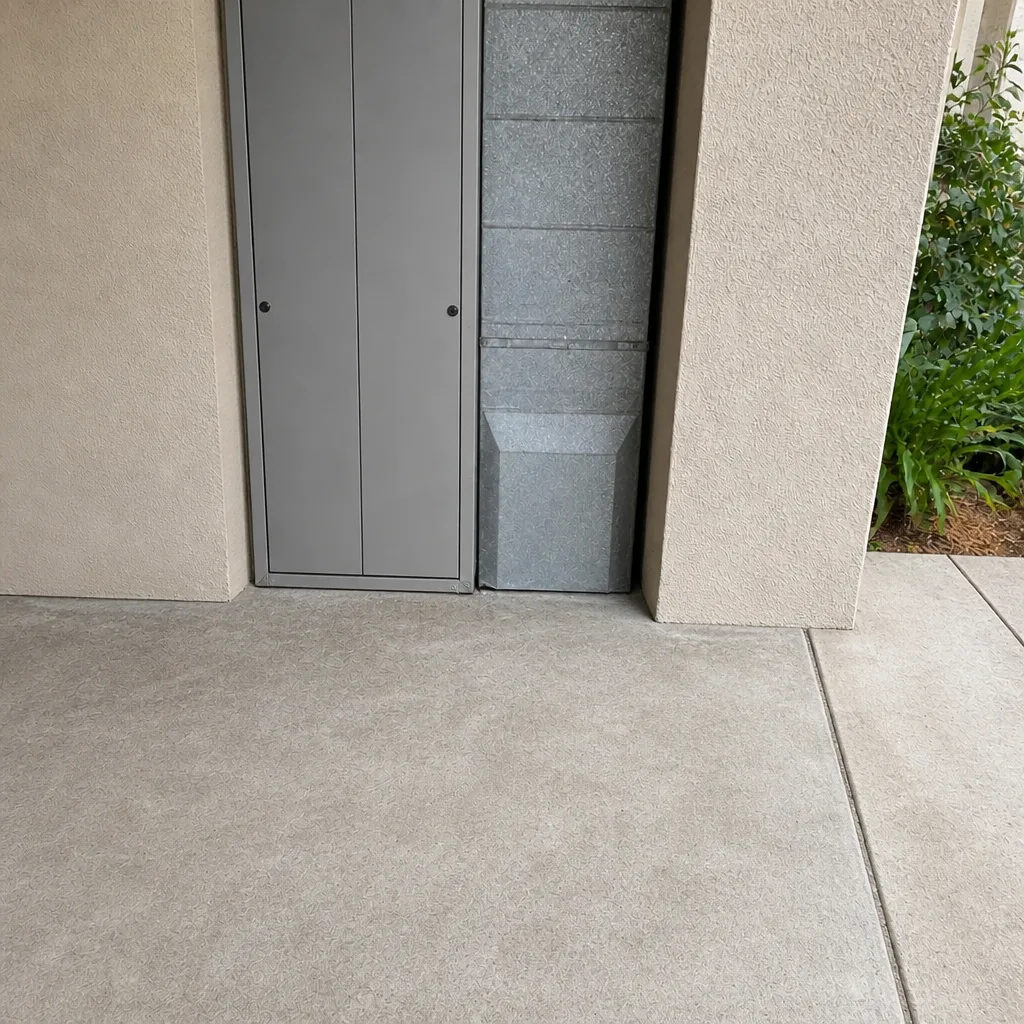
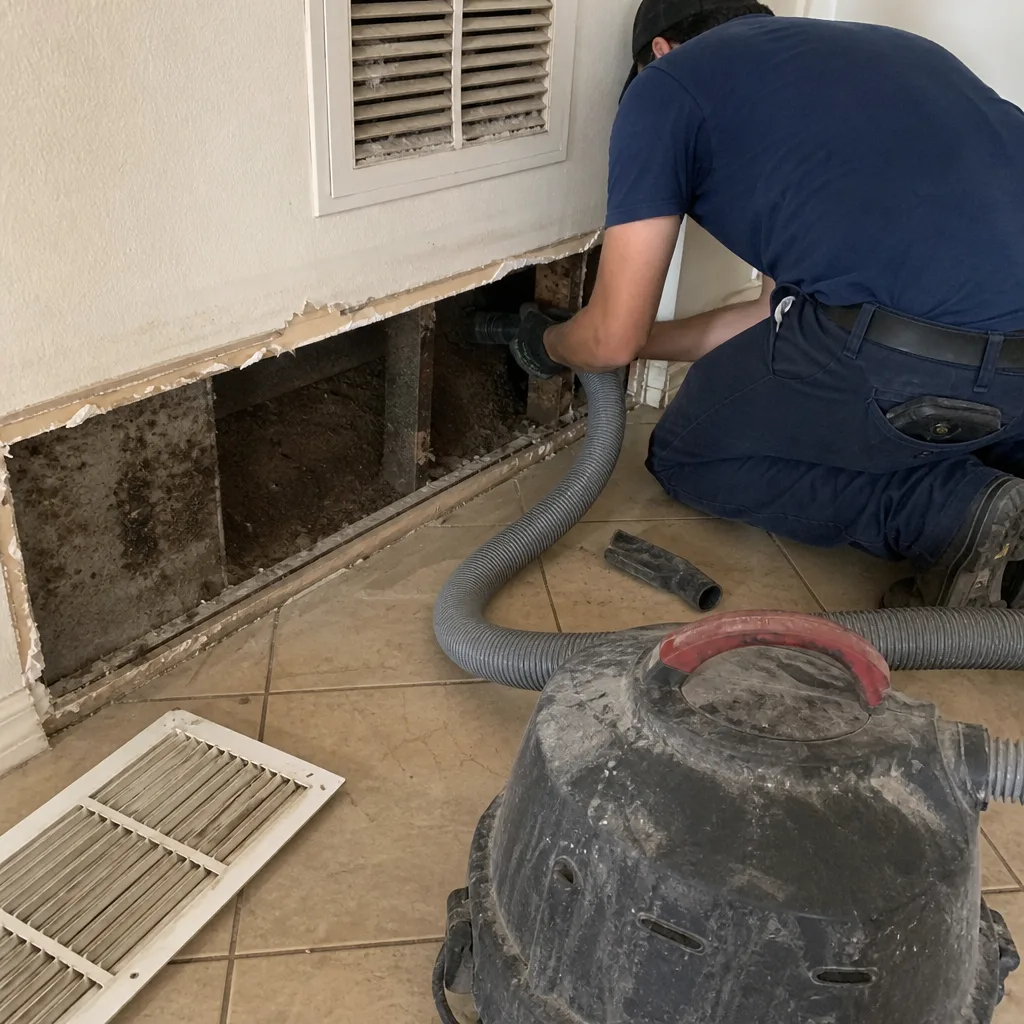
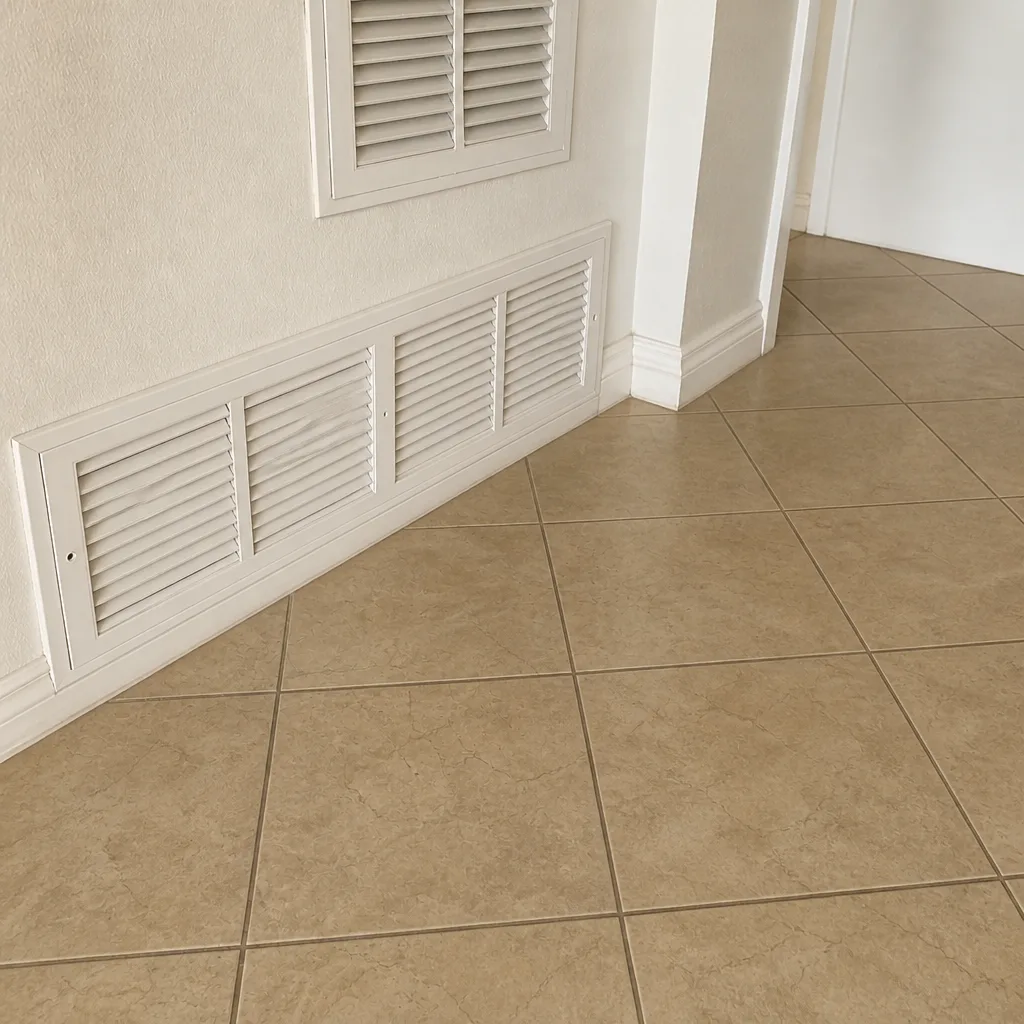
Whole-system duct and dryer vent check with before-and-after photos - you see exactly what came out of your vents
That "$99 whole-house special" is a bait ad - the real number appears once they are in your hallway, or the "clean" is a shop-vac at the register. We photograph the inside of your ducts before and after instead.
Air Duct Cleaning Warning Signs: A Brea Homeowner’s Reference Guide
Most warning-sign articles point you toward the obvious: dusty registers, a faint smell, visible grime around the grilles. Those are aesthetic signals, and by the time they show up, the buildup behind them has usually been growing for a while. The signals that matter more are functional ones: a bedroom that won’t come down to temperature, a supply register with weak push, a utility bill that creeps up without explanation. If one room in your house always sits 4 to 6 degrees warmer than the thermostat setting, that’s rarely a sizing problem. It’s almost always a duct issue, and debris accumulation is one of the top three causes. This guide walks you through the warning signs experienced technicians read before they open a single access panel, and shows you how to spot the same signals in your own Brea home.
Quick Answer
The main warning signs of an air duct problem are uneven room temperatures, weak airflow at some registers, rising energy bills, musty or metallic odors when the system starts, and visible dust around supply vents. In Brea homes built between the 1970s and 1990s, sagging or kinked flex duct and liner separation are also common. Some signs call for cleaning. Others, like collapsed runs or disconnected joints, call for repair and sealing before any cleaning begins.
Styles & brands we work with
- Whole-home duct cleaning
- Dryer vent cleaning
- Camera inspection
- Sanitizing & deodorizing
Table of Contents
- Aesthetic vs. Functional Warning Signs
- How to Test for Functional Warning Signs Yourself
- Warning Signs Tied to Brea’s Housing Stock
- The Smell Diagnostic: What Each Odor Tells You
- Post-Renovation and Post-Pest-Treatment Signals
- Cleaning vs. Repair: Which Signs Point Where
- When to Call a Professional
- Frequently Asked Questions
Aesthetic vs. Functional Warning Signs
Aesthetic signs are the ones everyone recognizes: gray fuzz on the supply registers, dust streaks on the ceiling around a grille, a return grille that never quite looks clean. They’re real signals, but they tell you very little about what’s happening inside the duct run itself. Dust collects on the outside of a register because the supply air is under pressure and pushing particles out. That happens in clean systems too, especially during dry stretches.
Functional signs are the ones that point to actual system behavior. They include:
- Uneven temperature: one room that stays several degrees off the thermostat while others hold steady.
- Weak airflow: a supply register you can hold a hand near without feeling much push, especially compared to a register on the same trunk.
- Pressure imbalance: a door that pushes itself shut or a room that gets harder to heat or cool than the rest of the house.
- Rising utility bills: the same cooling load costing more month over month without a rate change.
- Longer run times: the system cycling on and staying on, working hard to reach a setpoint it used to hit easily.
- Recurring filter loading: a filter that clogs faster than it used to, even after replacement.
Functional signs tell you the system is losing efficiency somewhere. In our experience, that somewhere is usually ductwork. Restricted airflow from debris, a partial collapse, or a leaky joint all force the air handler to work harder for less delivered comfort. If you’re noticing these in your Brea home, our air duct cleaning service starts with a full diagnostic before any equipment comes in.
How to Test for Functional Warning Signs Yourself
You don’t need a manometer to catch most of these. A few household tests will tell you whether the system is delivering evenly, and they take about ten minutes on a mild day.
- The register strip test: tape a strip of light tissue to a supply register. Turn the system on and watch. It should push out at a steady angle. A strip that flutters weakly, or barely moves, means the register is receiving less air than it should.
- The same-trunk comparison: pick two registers on the same duct run, one near the air handler and one at the far end. Compare push at both. A big drop-off toward the end is a sign of restriction somewhere in the run.
- The thermostat swing test: place a thermometer in a room that feels off, close the door, and let the system run a full cycle. Note the gap against the thermostat. A persistent 4- to 6-degree difference points to an airflow or duct problem, not a thermostat problem.
- The return test: hold tissue against the return grille. It should pull firmly. Weak return air often accompanies restricted supply, and both point to system-wide restriction rather than a single room issue.
- The filter check: note how long a fresh filter lasts. If it loads noticeably faster than it did a year ago, airflow has likely changed somewhere upstream.
None of these tests tell you exactly where the problem is. That takes access and proper equipment. But they’ll tell you whether a diagnostic visit is worth scheduling. In Brea, where the cooling season runs long and mild winters mean the system rarely gets an extended break, these small performance losses tend to be more visible than in colder climates.
Warning Signs Tied to Brea’s Housing Stock
A large share of Brea homes were built between the 1970s and the 1990s. That era of construction put flex duct in a lot of attics, and flex duct has a useful life. When it ages, it fails in predictable ways, and each failure shows up as a different warning sign.
- Sagging runs: flex duct that dips between hangers collects dust more readily, and the sag itself restricts flow. Sagging is common in attic runs exposed to years of summer heat.
- Kinked runs: tight turns around framing members can pinch a run down to half its cross section. Air volume drops, and the room at the end of that run never quite gets comfortable.
- Liner separation: the inner core of insulated flex duct can come loose from the outer jacket. Once that happens, the insulation and the airflow mix, and you get fibers and dust delivered to the room along with the air.
- Joint separation: taped or mastic joints loosen over time. A gap at a joint means air leaking into an attic, which shows up as a pressure problem and a comfort problem at the same time.
Walking through a Brea home built in that window, these are the first things we look for. Older ductwork in any climate shows wear, but dry Southern California summers are hard on flex duct, and the attic environment amplifies that. If you’re seeing a sagging or kinked run along with a room that won’t hold temperature, the duct itself may need repair or replacement, not just cleaning. Our full-system service exists so the same team that cleans can also find and fix that damage.
The Smell Diagnostic: What Each Odor Tells You
Smell is one of the most useful diagnostic signals a duct system gives you, and most homeowners dismiss it as “just the house.” Each odor type points to a different cause.
Musty or damp smell
This is the most common one in Brea and usually points to moisture in the system. Condensate from the air handler, a humid attic, or a return that pulls in damp air can leave biological growth on duct surfaces. Musty smell plus allergy symptoms that worsen when the system runs is a strong signal for cleaning and an inspection of the moisture source.
Metallic smell
A metallic or tinny odor is often a rust or corrosion signal. Sheet metal ductwork showing oxidation is a warning that moisture has been present for a while. It’s also a sign that a duct may need a closer look before cleaning.
Burning or hot smell
A hot or burning smell is different from the others. It can point to a problem with the air handler, a motor, or wiring rather than the ducts, and it warrants a service call before you run the system further. That belongs on the electrical safety side of the trade, so treat it as a prompt to have the equipment checked, not something to diagnose yourself.
Chemical or solvent smell
A chemical or solvent smell shortly after painting, pest treatment, or new flooring is a sign that contamination is being drawn into the return and spread through the system. That’s covered in the next section.
In our experience, a musty smell that gets stronger the longer the system runs is the most reliable single indicator that a duct cleaning visit is due. Cleaning removes the growth; sanitizing and air quality treatment handle the residual side. We use Guardsman-grade products in our sanitizing work for exactly this reason: the smell gone at the street shouldn’t come back the next week.
Post-Renovation and Post-Pest-Treatment Signals
Two events that most cleaning schedules ignore both create contamination that lands right in the ducts. If one of these applies to your Brea home in the last year, look for their specific warning signs.
After a renovation
Remodel work puts drywall dust, wood dust, and construction particulates into the air, and the return pulls it straight into the system. Signs to look for:
- A fine gray dust that resurfaces on furniture within days of wiping.
- Filters that clog far faster during and after the project.
- Registers that look dirtier on one side of the house than the other.
- New roughness at return grilles that wasn’t there before the work started.
After pest treatment
Pest control applications involve aerosolized chemicals and, in some cases, powder or dust placement in wall voids. If the return is anywhere near the treatment area, the system can pull chemical-laden air into the ducts. Look for:
- A chemical or solvent smell that persists well beyond the expected treatment window.
- A new smell that shows up only when the system runs.
- Occupants reporting irritation or headaches when the system cycles.
These are signs to act on rather than wait out. Standard cleaning schedules assume normal household dust loading, not construction debris or treatment residue. This is one of the reasons we treat air quality as its own service: a system that just went through a renovation or a pest treatment often needs more than a standard cleaning pass. We carry Honeywell and Aprilaire filtration and air quality products precisely for that gap between cleaning and long-term improvement.
Cleaning vs. Repair: Which Signs Point Where
Not every warning sign means “clean the ducts.” Some mean “stop, fix the ductwork first, then clean.” Bringing a cleaning machine into a damaged system can make things worse by pushing debris into a leak or blowing it into the attic.
Signs that point to cleaning
- Consistent dust at registers and return grilles.
- Musty smell that intensifies when the system runs.
- A system that hasn’t been cleaned in several years and shows heavy filter loading.
- Visible dust and debris at the register faces, with normal airflow to the room.
Signs that point to repair before cleaning
- A collapsed duct section: a run that has lost its shape entirely and delivers little or no air.
- Disconnected joints: visible gaps where a run has pulled apart at a fitting or trunk connection.
- Liner separation inside the run: a crackling or whistling sound that wasn’t there before, or airflow that varies with the home’s pressure changes.
- Duct runs with visible sag or kink that end at a cold or warm room: the duct geometry itself has changed the airflow.
- Pest activity inside the system: nesting material and contamination in the run, which should be removed and the area sealed, not just vacuumed.
That last group is why duct repair and sealing matters as its own service. Cleaning a system with a disconnected joint leaves the leak in place, and the system keeps pulling in attic air after the visit. We can repair and seal those connections during the same visit, so you don’t have to schedule a second contractor. Our HVAC cleaning work follows the same principle: diagnose first, then decide what the system actually needs.
Common Mistakes to Avoid
- Treating a dusty register as the whole story. A dusty grille is a surface signal. The real question is what’s happening in the run behind it, and that takes access to answer.
- Assuming a warm room is an HVAC sizing problem. In Brea homes built in the 1970s through the 1990s, a room that runs 4 to 6 degrees warmer than the setpoint is more often a duct problem than a sizing problem. Get the ducts checked before you entertain a system replacement.
- Skipping a return tear-down after a renovation. Standard cleaning schedules don’t account for construction debris loading. If you’ve remodeled in the last year, ask for a return inspection, not a standard cleaning pass.
- Cleaning before repairing. If a duct run is collapsed or a joint has pulled apart, cleaning first pushes debris into places it shouldn’t go. Diagnose the damage first.
- Ignoring a chemical smell after pest treatment. A chemical smell that persists after the treatment window is a sign the system has pulled treatment residue into the ducts. Waiting won’t clear it.
- Hiring a single-machine crew for a five-part job. Cleaning, dryer vent safety, HVAC cleaning, repair and sealing, and air quality treatment are separate services. A crew with one shop vacuum and no sealing capability will leave the root problem in place.
- Ignoring the dryer vent as a separate system. Dryer vent cleaning is a fire-safety service, not a cleaning add-on. A clogged dryer vent is a heat load problem with a fire risk attached.
If you’ve skipped a step in the list above or you’re not sure which category your warning signs fall into, a diagnostic visit resolves it. Call (866) 947-9306 and we’ll help you sort the signs from the symptoms.
When to Call a Professional
Some signs you can handle with a filter change and a call to schedule. Others need a professional on-site. Call us if any of the following applies:
- One or more rooms stay 4 to 6 degrees off the thermostat after a filter change.
- You smell musty, metallic, or chemical odors when the system runs.
- You’ve had a renovation or pest treatment in the last year and the system hasn’t been inspected.
- You’ve seen a sagging, kinked, or separated duct run in the attic.
- A supply register has almost no push compared to others on the same trunk.
- Your dryer vent hasn’t been cleaned in years, or you’ve noticed clothes taking longer to dry.
Brea Air Duct Cleaning Pros offers free estimates in Brea – call (866) 947-9306. We answer 24/7. Fast dispatch from 7am to 7pm, Sunday through Friday. Every visit starts with a written diagnostic; we use Rotobrush and Nikro systems for the cleaning work and carry Honeywell, Aprilaire, and Abatement Technologies products when the diagnosis calls for air quality treatment. The written estimate sets the price before any work starts.
Frequently Asked Questions
Uneven room temperatures, weak airflow at registers, rising energy bills without a rate change, musty smells when the system runs, and fast-loading filters are the most common. In Brea’s older homes, sagging or kinked flex duct and liner separation are the most frequent physical causes behind those signs. If two or more signs apply, it’s worth a diagnostic visit. Call (866) 947-9306 for a free estimate.
Air duct cleaning is priced per system, not per vent, and the written estimate you get after a diagnostic sets the final price. Per-vent pricing is where most of the bait-and-switch complaints in this trade come from: a low teaser rate that becomes a far larger invoice once the technician is on-site. Call (866) 947-9306 for an exact quote. Estimates are free.
Cheap quotes usually reflect a smaller scope and lighter equipment. A single shop vacuum and a crew with no access to the full runs behind the registers won’t do the same job as a system-wide clean with proper equipment and sealing capability. Professional-grade platforms like Rotobrush and Nikro are built to handle the full run and the components behind it. If a quote is dramatically cheaper, ask exactly what’s included and whether they can seal what they find. Call (866) 947-9306 to compare a real estimate.
Ask for before-and-after photos of your own ducts, taken from the access point and not reused from another job. That’s the only reliable way to see the difference between a real cleaning and a register wipe-down. We include photos as part of the job documentation. Call (866) 947-9306 to schedule a diagnostic.
Most homes go three to five years between cleanings under normal conditions. Homes with pets, recent renovations, pest treatments, or allergy-sensitive occupants usually need a shorter interval. If your Brea home has had remodel or pest work in the last year, treat that as a separate trigger rather than waiting for the normal schedule. Call (866) 947-9306 and we’ll help you decide the right timing.
Yes. A room that runs 4 to 6 degrees warmer than the thermostat is more often an airflow problem than a sizing problem. Common causes are a kinked or sagging run, a partially disconnected joint, or heavy debris restricting the run. A diagnostic visit identifies which. Call (866) 947-9306 for a free estimate.
See the difference
 Before
 After
 Before
 After
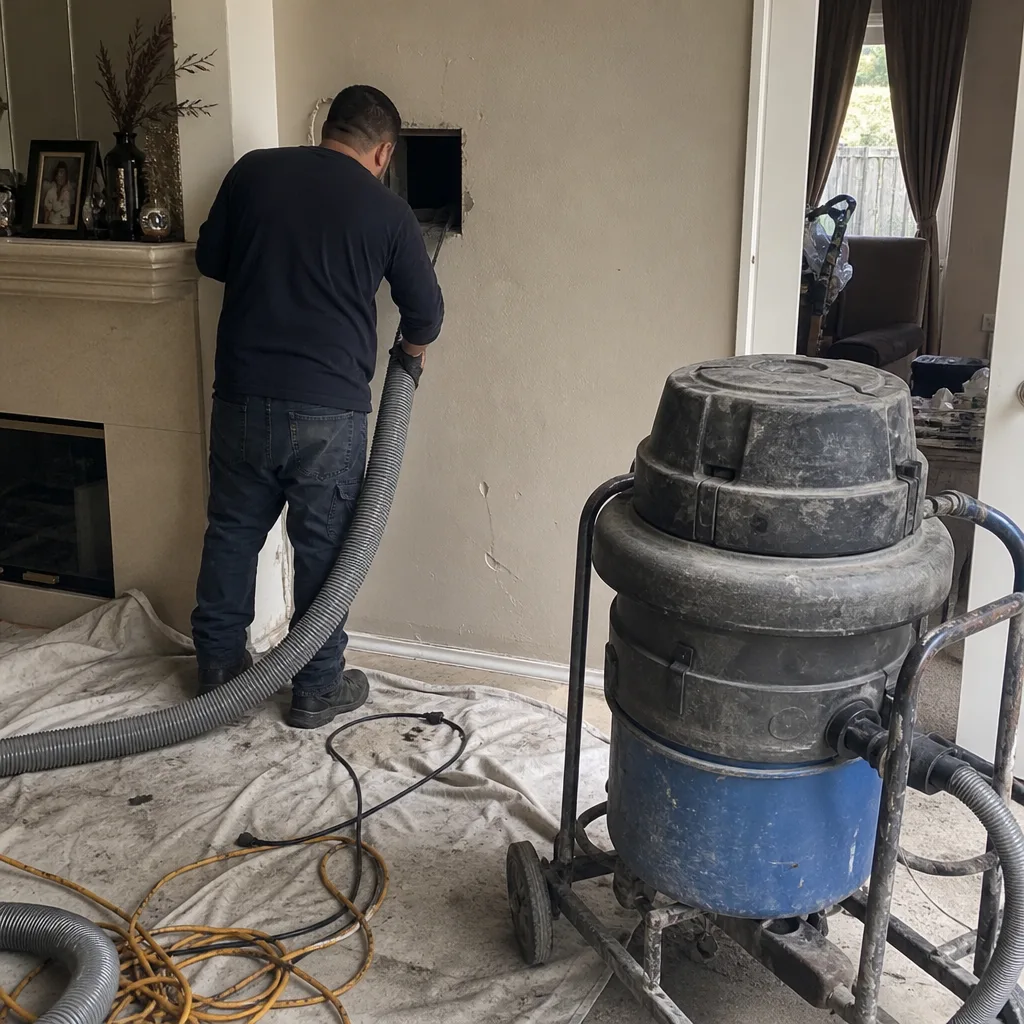 Before
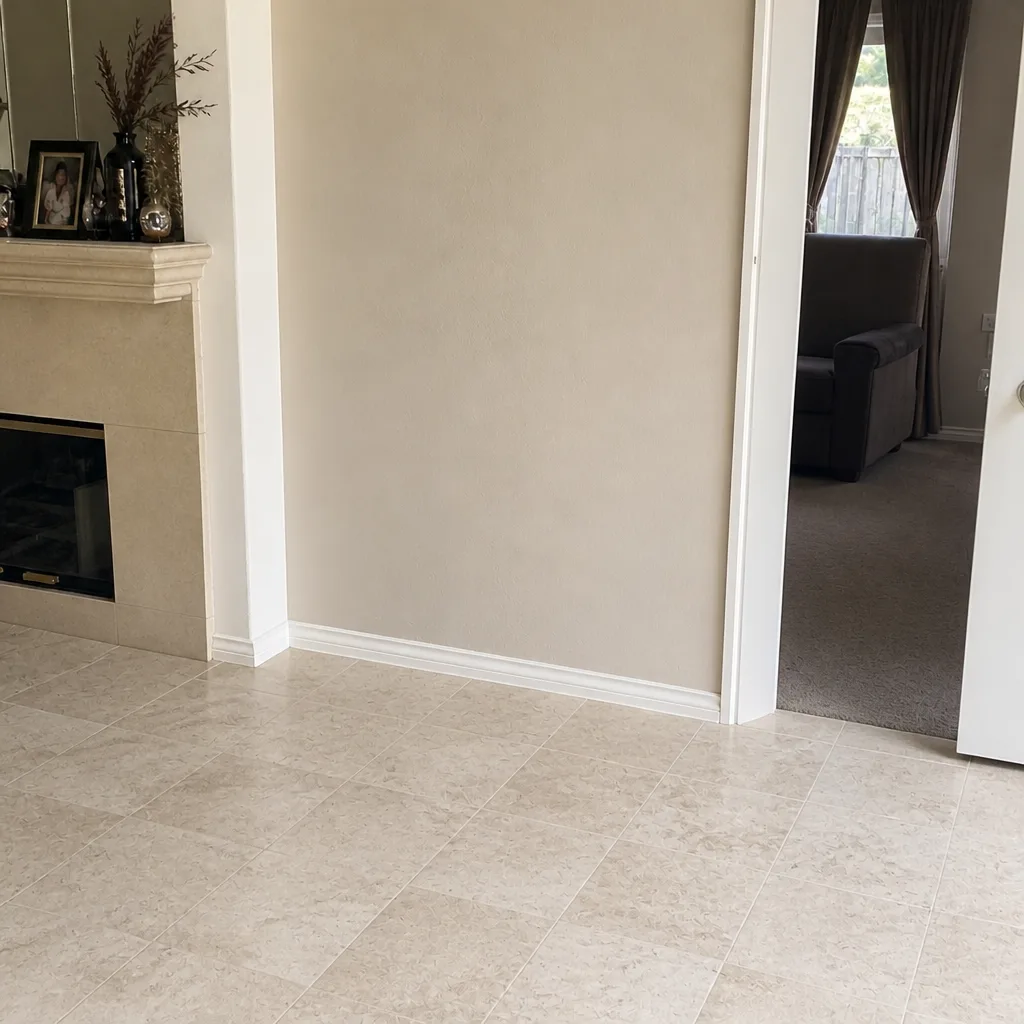 After
The Bottom Line
The warning signs worth acting on are the functional ones: uneven temperatures, weak register push, rising bills, smells that show up when the system runs, and ducts that fall short in a visual walk-through. Aesthetic signs like dust at the registers are worth noting, but they rarely tell you what’s happening in the run behind them. In Brea homes built between the 1970s and 1990s, sagging, kinking, liner separation, and joint damage are the most common physical causes of functional signs. Cleaning is the answer for buildup. Repair and sealing is the answer for damage. A proper diagnostic tells you which you need, and it’s the only way to get to the right answer without guesswork.
Contact Brea Air Duct Cleaning Pros
Call (866) 947-9306 for a free estimate. We answer 24/7. Fast dispatch from 7am to 7pm, Sunday through Friday. Every diagnostic comes with a written estimate, one flat price per system, and before-and-after photos of your own ducts.
Our technicians have up to 11 years of experience. We handle the full duct ecosystem – air duct cleaning, dryer vent cleaning, HVAC cleaning, repair and sealing, and air quality treatment – so you’re not managing multiple contractors to resolve one problem.
Written by the team at Brea Air Duct Cleaning Pros.