
Last updated November 23, 2026
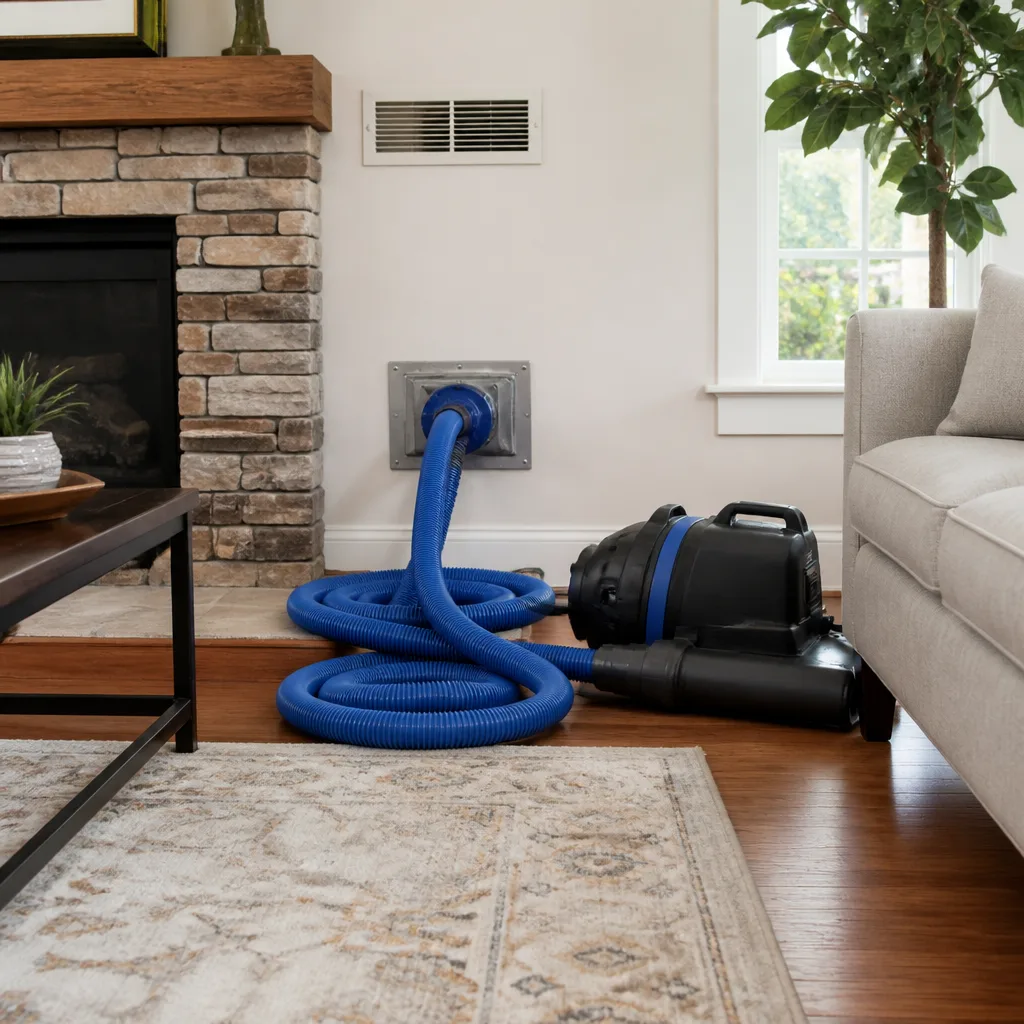 Whole-home duct cleaning
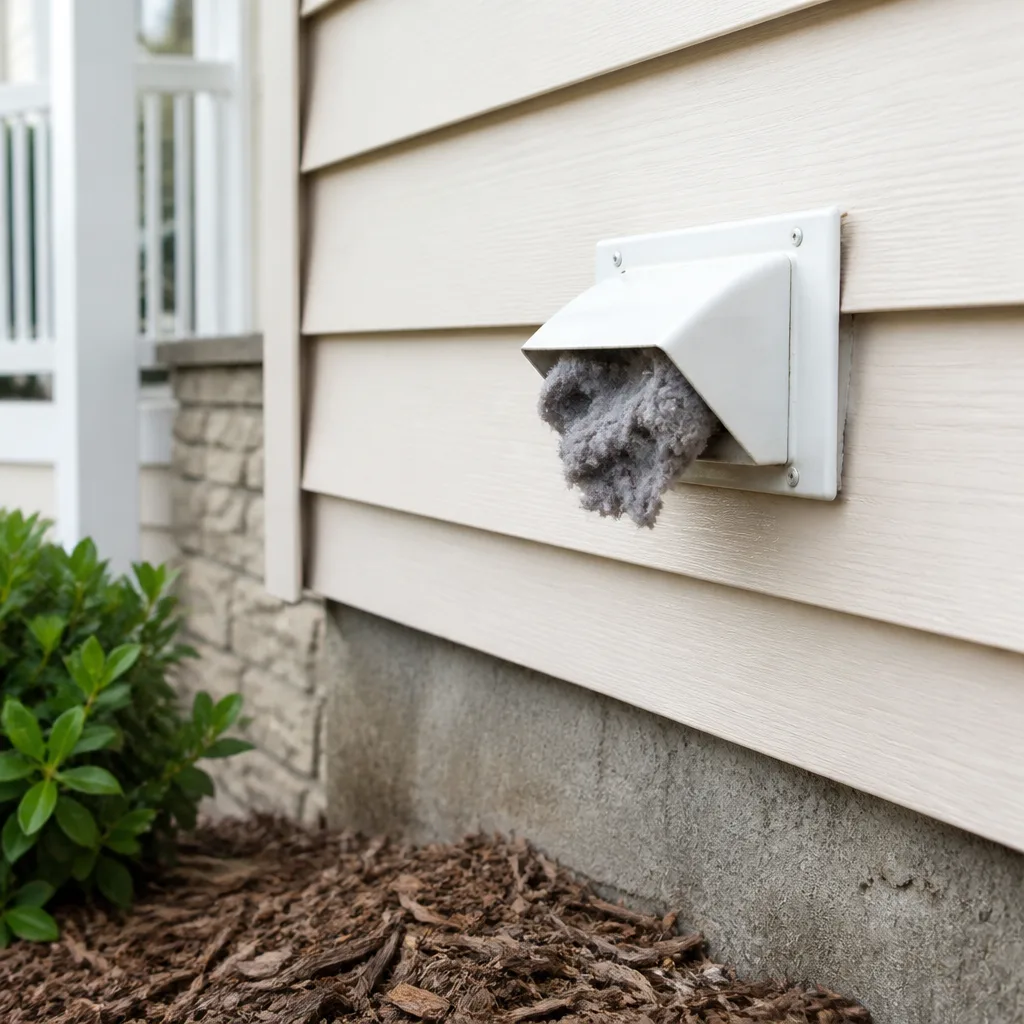 Dryer vent cleaning
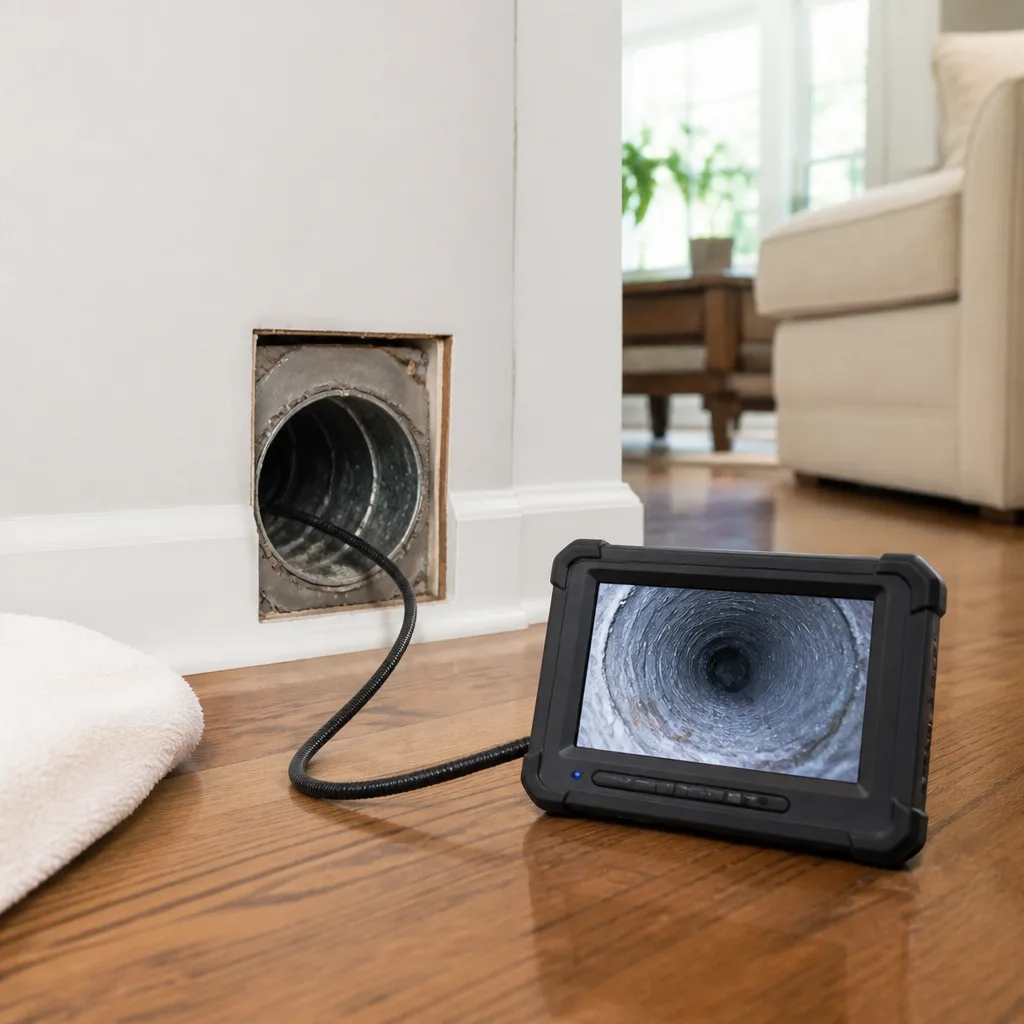 Camera inspection
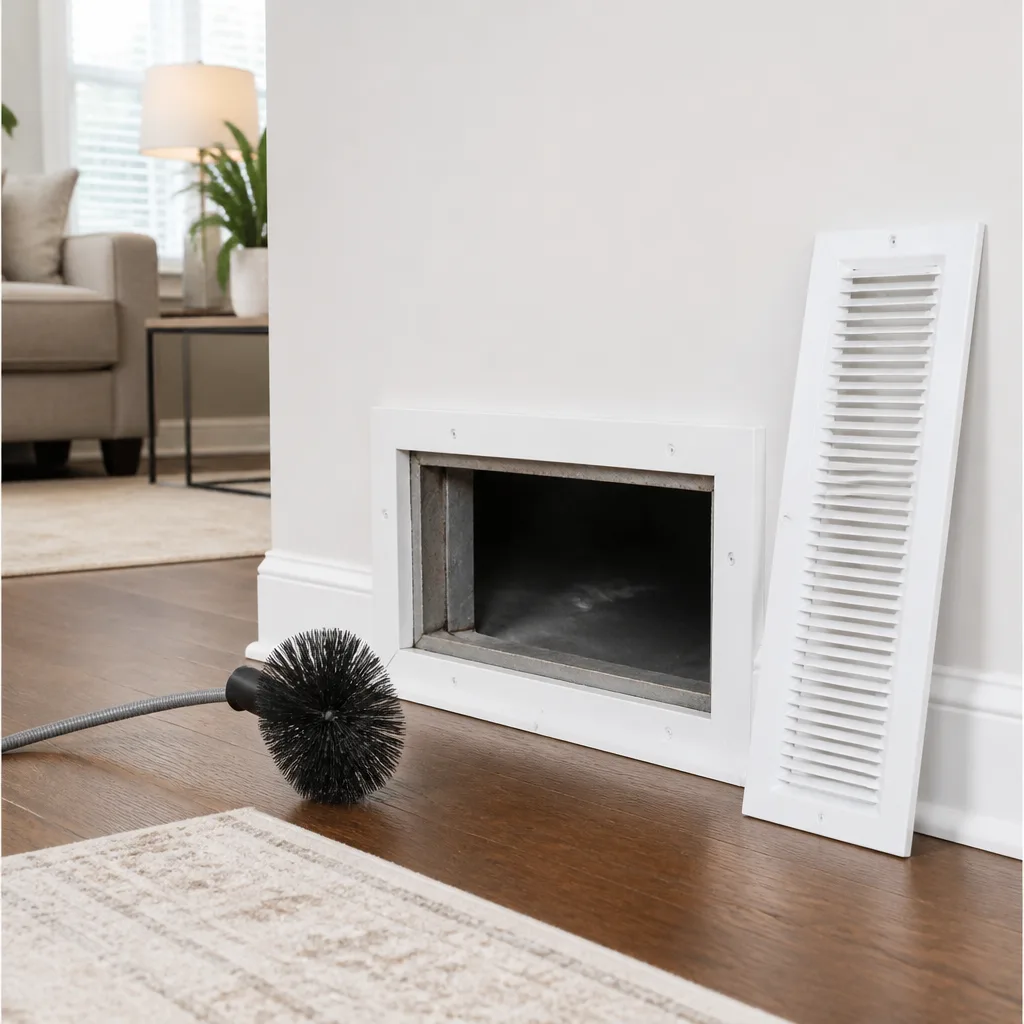 Sanitizing & deodorizing
Whole-system duct and dryer vent check with before-and-after photos - you see exactly what came out of your vents
That "$99 whole-house special" is a bait ad - the real number appears once they are in your hallway, or the "clean" is a shop-vac at the register. We photograph the inside of your ducts before and after instead.
The Complete Guide to Air Duct Cleaning in Brea
Most people assume a truck pulls up, someone feeds a hose into a register, and the job is done. Here’s the counterintuitive part: the vacuum is rarely the weak link in a bad duct cleaning job. What gets skipped is the system diagnosis. Your supply ducts, return ducts, air handler, coil, and registers work as one connected loop, and cleaning only the parts you can see leaves the contamination sources sitting untouched. In this guide, we’ll walk through what a complete job actually involves, how Brea homes and Southern California’s smoke season change the equation, and how to tell when the work is really finished.
Quick Answer
A complete air duct cleaning job clears the entire system, not just the registers: supply and return ducts, the air handler, the evaporator coil, and every vent cover, using professional negative-pressure equipment and rotary brushes rather than a shop vacuum. It should finish with verified airflow readings and a camera check, not a verbal “all done.” In Brea, the shape of your house (single-story slab or two-story with attic runs) and the region’s wildfire smoke season both affect how long the job takes and how often it needs doing.
Styles & brands we work with
- Whole-home duct cleaning
- Dryer vent cleaning
- Camera inspection
- Sanitizing & deodorizing
Table of Contents
- Source-Removal Cleaning vs. Blow-and-Go: What’s the Difference?
- The Equipment That Separates a Real Job from a Vacuum
- How Brea Homes Change the Job: Slab vs. Attic Runs
- The Full System Scope: Why the Supply Side Alone Isn’t Enough
- Wildfire Smoke and Santa Ana Winds: Recontamination You Can’t Ignore
- What “Done” Looks Like: The Post-Cleaning Inspection
- What Air Duct Cleaning Costs in Brea
- How Often Does It Really Need Doing?
Source-Removal Cleaning vs. Blow-and-Go: What’s the Difference?
Source-removal cleaning is the practice of physically extracting accumulated debris from the surfaces inside the duct system and carrying it out of the home under negative pressure. Blow-and-go is the opposite: an underpowered machine stirs up dust, some of it settles back into the ducts, and the “cleaning” is finished before anything meaningful leaves the house. The difference shows up fast after the visit if you have allergies, and it shows up in your energy bill over time.
The industry standard most serious contractors reference is the NADCA (National Air Duct Cleaners Association) approach, which treats source removal plus a clean air handler and coil as the baseline for a legitimate job. Here’s how the two practices differ in plain terms:
- Source-removal cleaning: sets up negative pressure at the main trunk so debris flows into the vacuum rather than into the room; uses rotary brush systems to dislodge caked material from duct walls; contacts every branch line; cleans the air handler and coil; finishes with a visual or camera verification.
- Blow-and-go: uses a single hose at a few registers, no negative pressure seal, no coil cleaning, no verification. You’ll see a burst of dust from the vents at first, then it settles. The problem isn’t solved, it’s redistributed.
If your technician doesn’t ask where the air handler is before they start, that’s a signal the job is going to be shallow. A full job in Brea typically takes between two and five hours depending on square footage and the number of branch lines, and the access work at the air handler alone can eat 45 minutes.
The Equipment That Separates a Real Job from a Vacuum
Professional duct cleaning uses one of three equipment families, often a combination of all three on the same job. Understanding them makes it easy to know what’s actually happening during a visit and what’s missing if the work feels too quick.
- Truck-mounted negative pressure units. These generate high airflow (measured in cubic feet per minute, or CFM) and connect to the main trunk through a sealed port. A machine rated well below 2,000 CFM can’t clear a residential trunk line reliably – the airflow simply isn’t enough to carry caked debris back to the filter. When a discount crew shows up with a shop vacuum rated in the hundreds of CFM, the physics of the job work against them.
- Rotary brush systems. Rotobrush equipment uses a rotating brush head on a flexible shaft to physically dislodge material from duct walls, then carries it back into the collector. This matters because dust and dander bond to duct surfaces over the years; suction alone often won’t break that bond on a cold-air return.
- HEPA vacuums and portable negative-pressure equipment. Nikro systems are often used where a truck-mount connection isn’t practical, like upper-floor branches on a Brea two-story, and where fine particulate filtration (HEPA) is required to keep particles from discharging back into the living space.
We run Rotobrush and Nikro equipment on every job we do, and the choice between the two is determined by access and duct layout, not by budget. If a quote is much lower than the others you’ve collected, ask what equipment is being used and whether it’s rated for the CFM the job actually requires. The answer usually explains the price gap.
How Brea Homes Change the Job: Slab vs. Attic Runs
Duct cleaning in Brea isn’t a one-size job because the housing stock in this city splits into two very different duct layouts. Get the layout wrong in your mind, and you’ll misunderstand why two neighbors’ jobs took such different amounts of time.
Single-story homes on slab foundations are the most common configuration across much of Brea. In these homes, ducts typically run in the attic or through soffits rather than under the slab. Access to the main trunk is often through the air handler closet, and branch returns are usually short. A job here can often be completed in a focused morning because the equipment can be set at one point and left to work through the system.
Two-story homes – and the older, larger homes in neighborhoods around the Brea Mall and the Craig Regional Park side – usually have ducts split between an attic run for the second floor and a separate trunk in a garage or mechanical closet for the first floor. That means:
- Two negative-pressure connection points rather than one.
- Branch lines that are longer, tighter, and sometimes routed through a low-clearance attic.
- More access work, more camera verification time, and a premium on covering furniture and flooring before the crew starts moving equipment.
Neither layout is “harder.” But if you’re comparing estimates across three different homes, factor in the layout before deciding one job is priced unfairly. A Brea two-story with two trunks is genuinely more work than a single-story slab home.
The Full System Scope: Why the Supply Side Alone Isn’t Enough
Here’s the mistake we see most often: a cleaning that focuses only on the supply registers (the vents that blow air into rooms) and skips the return side and air handler. Supply and return are two halves of the same loop, and the returns carry far more dust because they’re the suction side. If a company cleans your supply vents but not the returns, you’ve cleaned the cleaner half of the system.
A complete job covers every component in the loop:
- Return ducts. These carry dust-laden air back to the air handler. They’re often short and wide, and they accumulate the most debris. Clean these first so you’re not re-contaminating the supply side at the end.
- The air handler and blower wheel. The blower can get caked with dust, which reduces airflow and adds to system strain. Cleaning the blower wheel is part of a full job and often missed.
- The evaporator coil. A dirty coil can’t transfer heat efficiently. This is where your air conditioning performance in a Brea summer (and to a lesser extent, winter heating) gets compromised. Proper coil cleaning requires access to the coil cabinet, not just the filter slot.
- Supply ducts and branch lines. Cleaned after the returns and coil so no cross-contamination enters the supply side.
- Register covers and grilles. Removed, washed, dried, and reinstalled. Debris sits in these just as it does in the ducts.
The order matters. Cleaning in the wrong sequence is how dust ends up in the air now, not later.
Wildfire Smoke and Santa Ana Winds: Recontamination You Can’t Ignore
Brea sits in a part of Southern California that gets hit twice on air quality. Wildfire smoke from regional fires drifts into the region, and Santa Ana winds push dry, particle-heavy air through inland valleys. Either one is enough to load a clean duct system faster than a typical six- to twelve-month baseline would suggest.
When Santa Ana winds blow, the pressure differential across a house – especially an older Brea home with average weatherstripping – is significant. Fine smoke particles and ash get pulled in through doors, attic penetrations, and unsealed return grilles. The particles that make it into the return trunk are the ones that then coat duct interior surfaces and the coil. It isn’t visible from a floor vent, but a camera inspection after a heavy smoke event usually shows it.
The practical fix is twofold. First, schedule duct cleaning after a significant local smoke event (not during it) rather than trying to stick to a fixed annual calendar. Second, address filtration and sealing. We install recognized air quality hardware from Honeywell and Aprilaire – high-MERV filter cabinets, media filters, and humidity or ventilation controls – that keep fine particles out of the system in the first place. A good filter is far cheaper than cleaning the ducts twice in a year because the filtration wasn’t upgraded.
If you’re considering air quality and sanitizing after a smoke event, pair it with a filtration upgrade. Cleaning without a filter improvement is a job you’ll be doing again sooner than you planned.
What “Done” Looks Like: The Post-Cleaning Inspection
A cleaning job that finishes with the technician walking toward the door without a camera or an airflow meter is a job you have no way to verify. The inspection is as much a part of the process as the cleaning is, and a legitimate contractor should be comfortable showing you the results.
Here’s what a completed post-cleaning inspection should include:
- Airflow readings. A technician should measure airflow at the return and at a representative sample of supply registers before and after cleaning. If the numbers haven’t moved and there was meaningful debris accumulation, something was skipped.
- Camera verification. A duct inspection camera is passed through the trunk and a few branch lines after cleaning so you can see the duct interior on a monitor. This is where the difference between a cleaning and a blow-and-go becomes obvious.
- Air handler and coil photo review. Before-and-after photos of the blower wheel and coil are the easiest record to keep. Ask for them.
- Register cover condition. Each cover should be reinstalled clean and undamaged, and any broken latches or bent grilles noted.
We provide before-and-after photos on every job, and we’re happy to show the camera feed to any homeowner who asks. If a contractor bristles at the request for verification, that’s the answer you needed.
What Air Duct Cleaning Costs in Brea
Air duct cleaning in Brea typically runs from around $350 for a straightforward single-story job with a limited number of branch lines up to $800 or more for a full-system cleaning on a two-story home with multiple trunks, a difficult attic run, and coil cleaning included. Duct repair and sealing, dryer vent cleaning, and air quality treatment are priced separately because they address different parts of the system.
Estimates below are typical for Brea, and the written estimate you receive sets the final price:
- Single-story home, standard system, supply + return + air handler: $350 – $550.
- Two-story home with multiple trunks or difficult access: $550 – $900.
- Coil cleaning add-on (when not included in the base quote): $150 – $300.
- Duct repair and sealing (per identified leak or isolated repair area): quoted per job.
- Air quality and sanitizing treatment: quoted per job, based on system size and product.
The most important thing in any quote: one flat price agreed before work starts. Per-vent pricing and coupon headline prices are how the industry’s bait-and-switch problem happens. Ask for a written, whole-system price before anyone touches a register.
How Often Does It Really Need Doing?
Most homes don’t need annual duct cleaning. The research-backed recommendation from industry standards is typically every three to five years for a home with regular filtration and no unusual contamination sources. The Brea-specific complication is wildfire smoke events, which can justify cleaning sooner than the calendar suggests.
Instead of a rigid schedule, watch for signals:
- Visible dust puffing from a register the first time the system starts after weeks off.
- A noticeable rise in allergy symptoms when the HVAC is running.
- Visible dust on the return grille after a smoke event.
- Increased energy bills without a rate change, which often points to system restriction (dirty coil, filter, or ducts).
- A recent remodel or dryer vent repair that pulled debris into the system.
We answer 24/7 when you need to talk through what you’re seeing. Fast dispatch from 7am to 7pm, Sunday through Friday.
If you’re scheduling dryer vent cleaning separately, do it before or after the duct job, not during – the negative-pressure setup makes both jobs slower if run simultaneously.
Common Mistakes to Avoid
- Choosing on coupon price. The discount coupon price is usually a teaser for using a shop vacuum on the visible registers. You’ll pay the difference in a system that’s still dirty.
- Skipping the returns and air handler. Supply-only cleaning is the most common shortcut in the trade. Ask explicitly whether returns, air handler, and coil are covered.
- Ignoring the coil. A Brea summer puts real load on the AC coil, and a dirty coil means the system works harder for less cooling. Coil cleaning is not optional for a system that’s been running a few years.
- Cleaning before a smoke event. If Santa Ana winds are forecast within a week or two, wait. Otherwise you’re cleaning a system that’s about to be loaded again.
- No camera or airflow verification. Any job that ends without a visual or meter-based check is a job you can’t confirm was done properly.
- Not asking about filtration. Cleaning without upgrading to a Honeywell or Aprilaire filter cabinet is a cycle you’ll repeat. Fix the filtration, extend the cleaning interval.
- Not reading the scope of the quote. A quote that says “duct cleaning” and nothing else is a red flag. It should list components and equipment.
See the difference
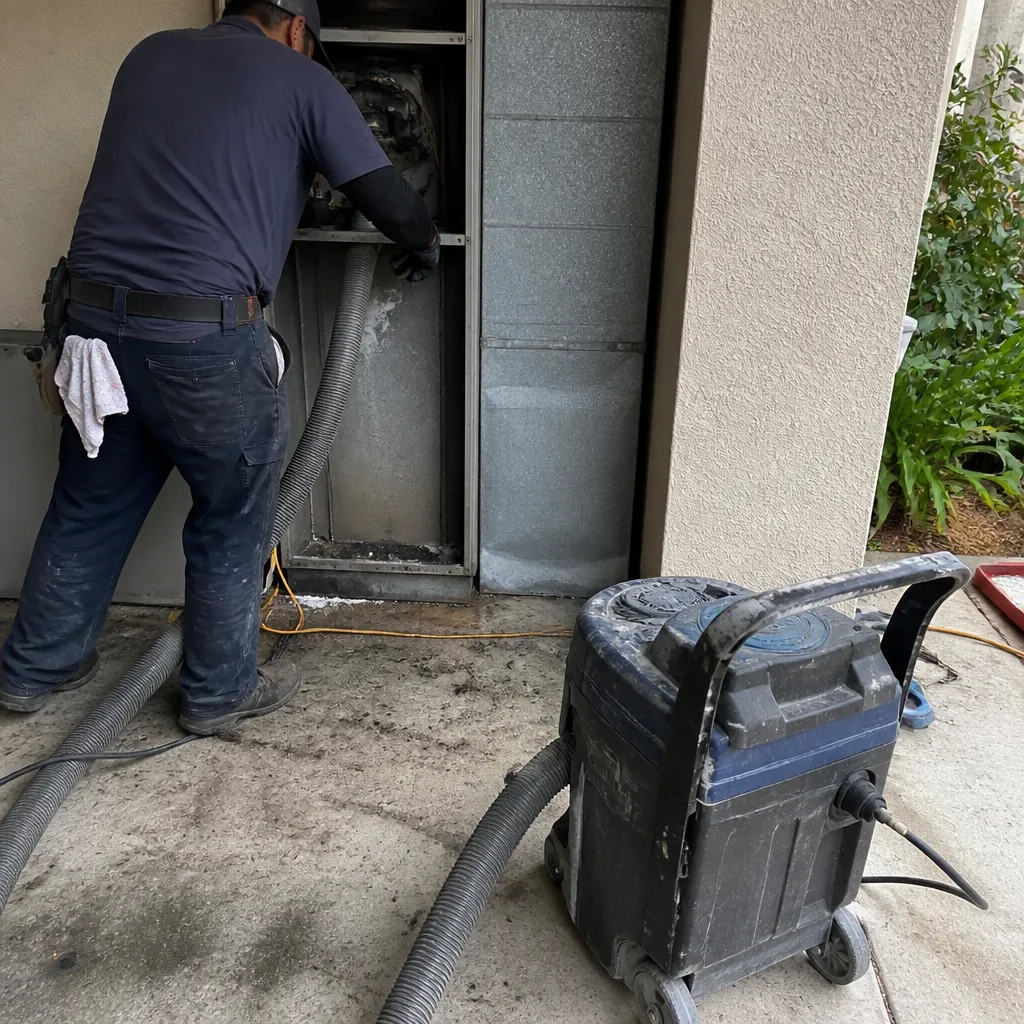 Before
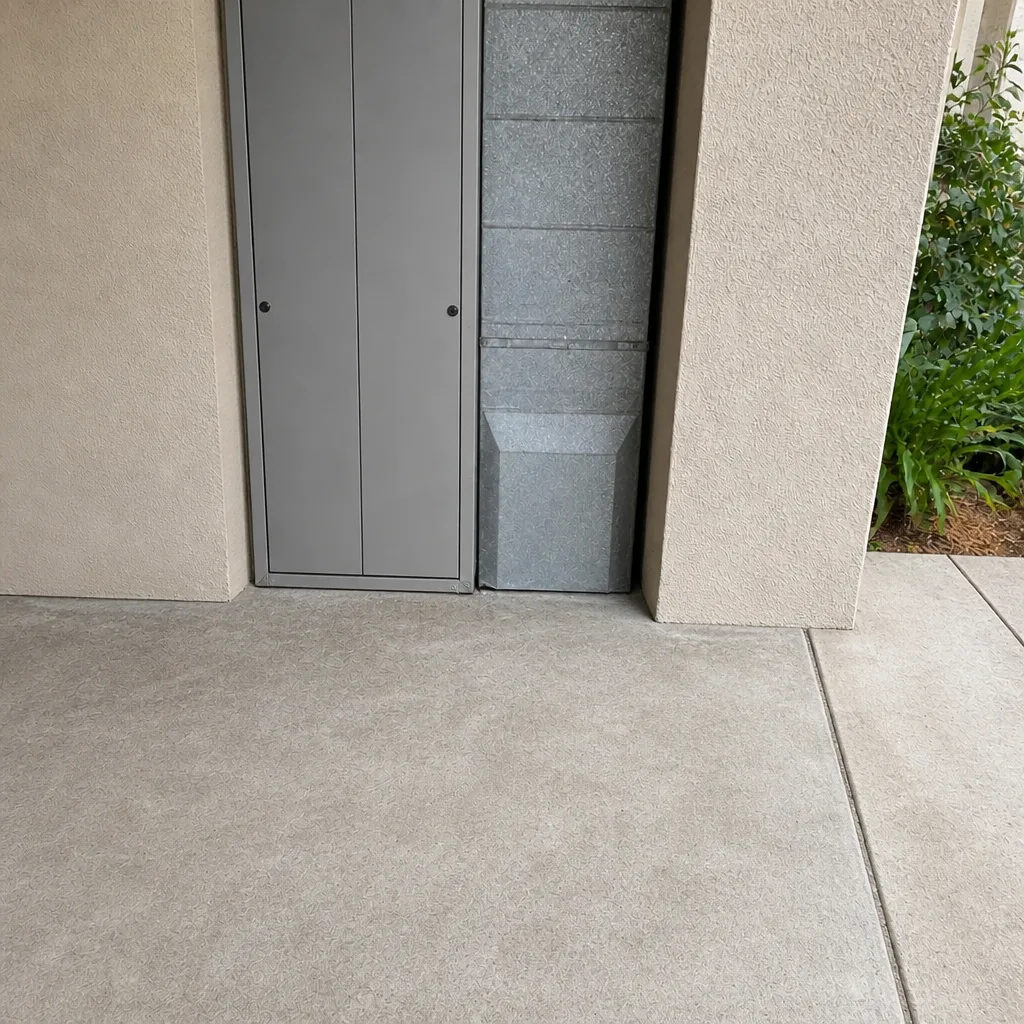 After
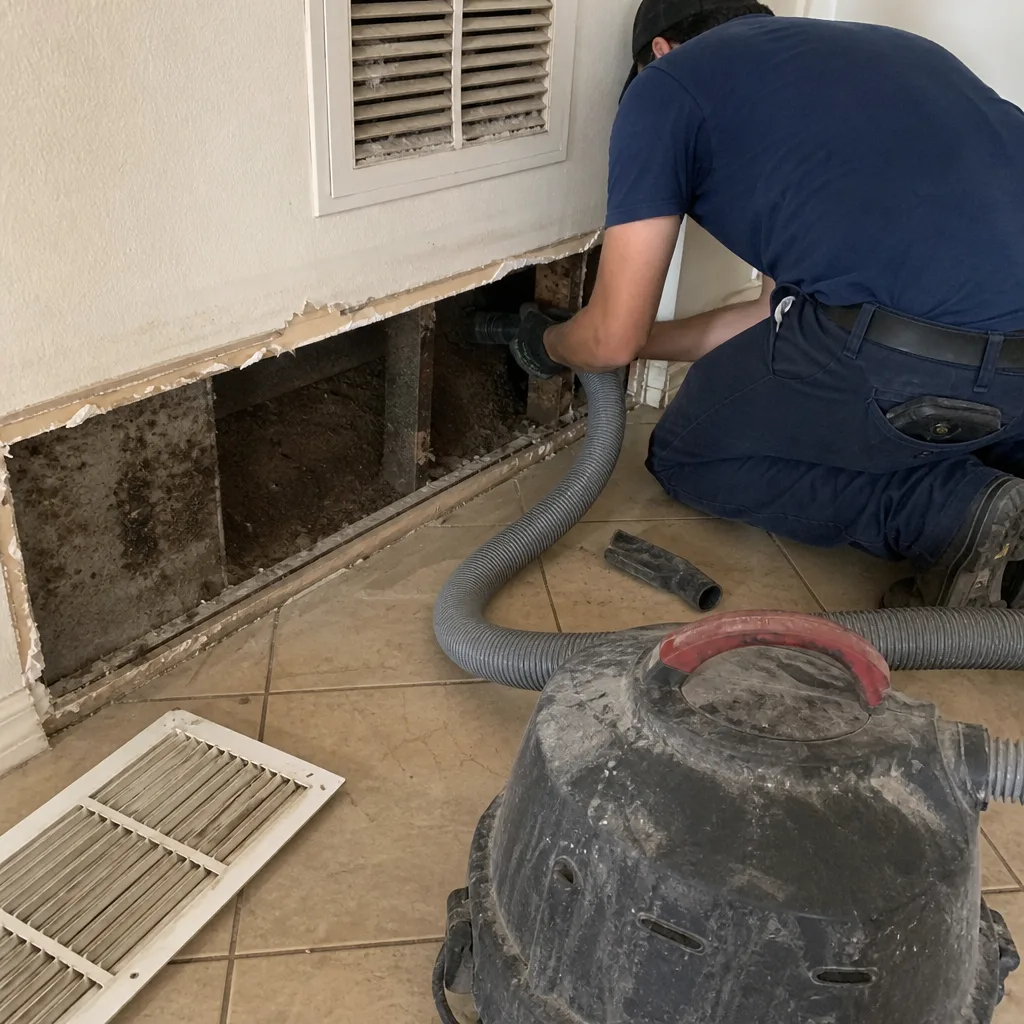 Before
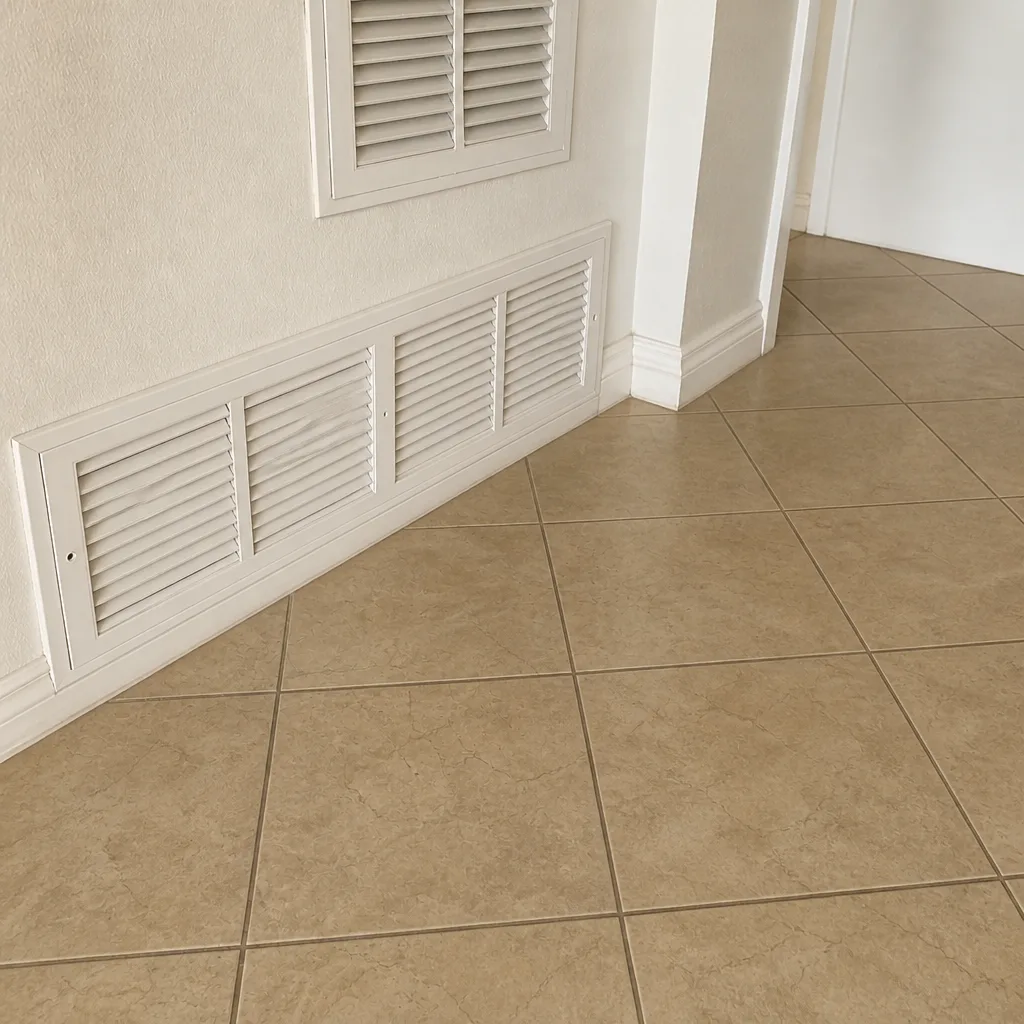 After
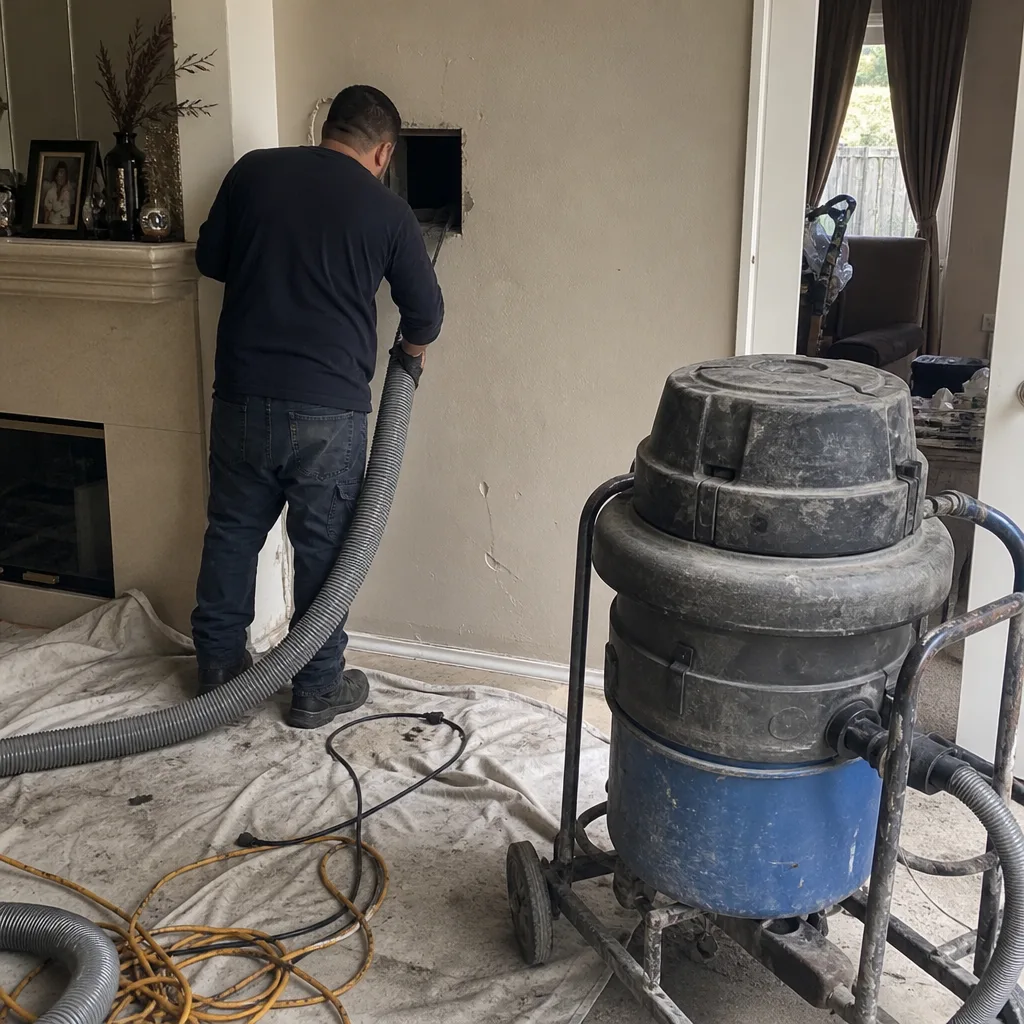 Before
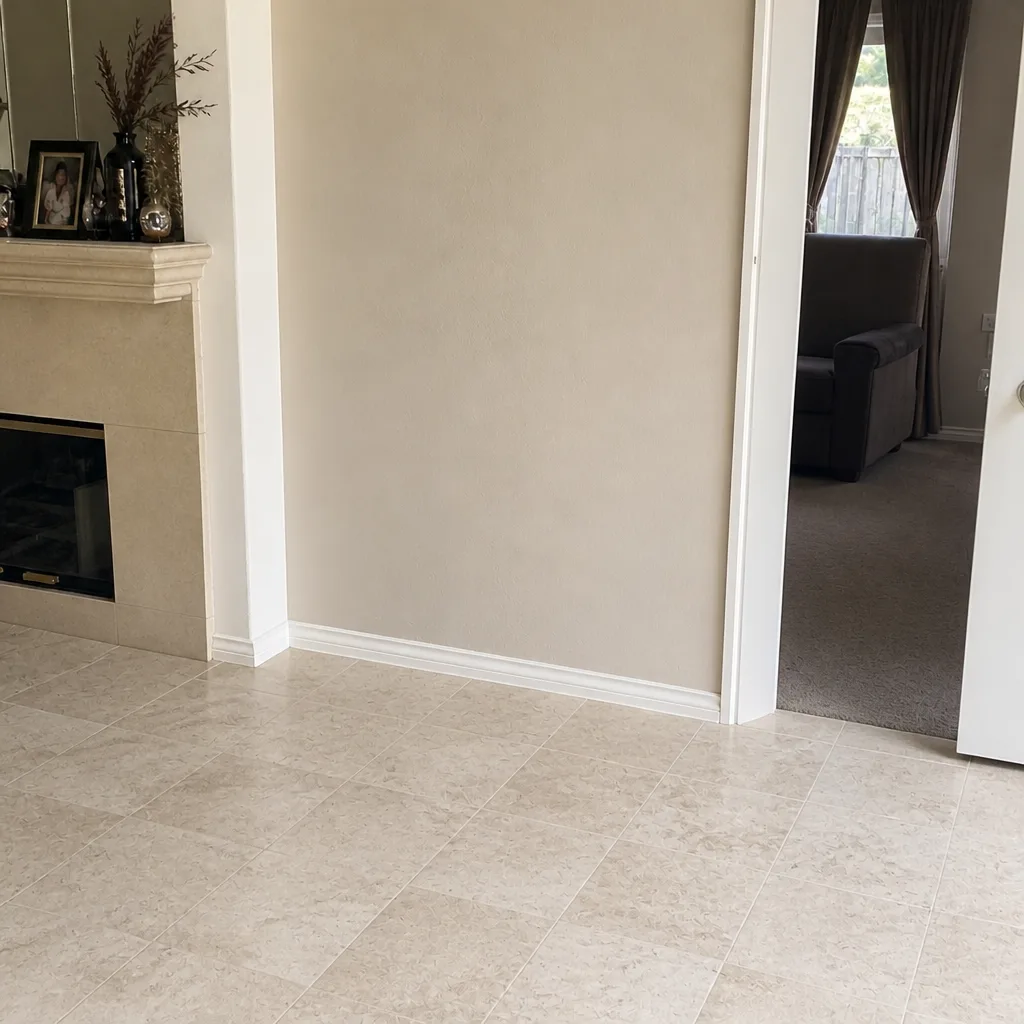 After
When to Call a Professional
Some problems need to be handled by a properly equipped contractor, not a weekend attempt. If you’re smelling musty or smoke odors every time the HVAC kicks on, if a family member has developed new allergy symptoms that track with the HVAC cycle, or if your utility bill has jumped without a rate change, a system inspection is worth the call. Visible debris or puffing dust from vents, signs of rodent activity in the ducts, or a dryer vent that takes two cycles to dry a load all belong on the professional list. Duct repair and sealing also matters here: a leaky return pulls attic air (and whatever else is in the attic) into the system, and that’s a sealing job, not a cleaning job. Brea Air Duct Cleaning Pros offers free estimates in Brea – call (866) 947-9306. We answer 24/7. Fast dispatch from 7am to 7pm, Sunday through Friday.
Frequently Asked Questions
Air duct cleaning in Brea typically runs $350 to $550 for a standard single-story system and $550 to $900 for a two-story home with multiple trunks, with the written estimate setting the final price. Anything priced significantly below those ranges usually points to equipment that can’t clear a residential trunk line. Call (866) 947-9306 for an exact quote – estimates are free.
The cheaper quote is usually built on a machine rated well below the CFM needed for a residential trunk line, which is why the job takes less time and moves less debris. The other common shortcut is skipping the returns and air handler entirely. Ask any contractor what equipment they use and whether the quote covers coils and returns before you compare price. Call (866) 947-9306 for a scope-based quote – estimates are free.
The answer is camera and airflow verification after the cleaning, plus before-and-after photos of the air handler and coil. A contractor who can’t provide those is asking you to take it on faith. We provide before-and-after photos on every job and will show the camera feed to any homeowner who asks. Call (866) 947-9306 to schedule a free estimate.
Every three to five years is typical for a home with adequate filtration and no unusual contamination events, and more often if a significant wildfire smoke event has passed through the region. Santa Ana winds can load a system faster than a normal calendar cycle would suggest. Call (866) 947-9306 if you’re not sure – we’ll talk through what to look for.
Yes. A single-story slab home typically takes two to three hours, while a two-story home with separate attic and garage trunks can take four to five hours because there are two connection points and longer branch runs. That’s normal, not an upsell. Call (866) 947-9306 with your home’s layout and we can give you a realistic time window with the estimate.
It can be, particularly if the return ducts or coil are the bottleneck. Cleaning the returns, air handler, and evaporator coil restores airflow and lets the system cool at lower effort. Duct repair and sealing adds to the gains by stopping leaks that pull attic air into the loop. Call (866) 947-9306 for a free estimate that evaluates the full system, not just the visible vents.
The Bottom Line
Duct cleaning isn’t a hose-in-a-register event – it’s a system diagnosis and source-removal process across returns, air handler, coil, supply ducts, and registers. Brea homes split between single-story slab layouts and two-story multiple-trunk homes, and each needs a different setup. Southern California’s wildfire smoke and Santa Ana winds should push your cleaning timing as much as the calendar does. The equipment matters (look for Rotobrush, Nikro, or comparable professional platforms) and so does the verification step at the end. If the contractor won’t show you the duct interior on a camera or give you airflow readings, the job isn’t complete.
Contact Us for a Free Estimate
If you’re ready to know what your ducts actually look like inside, or you want a whole-system assessment that covers cleaning, dryer vent, HVAC, repair and sealing, and air quality, we can help. Brea Air Duct Cleaning Pros works across all five of those services so you’re not coordinating between contractors. Our technicians have up to 11 years of experience, and we run Rotobrush and Nikro equipment on every job. Call (866) 947-9306 for a free estimate. We answer 24/7. Fast dispatch from 7am to 7pm, Sunday through Friday.
Written by the team at Brea Air Duct Cleaning Pros.