
Last updated November 23, 2026
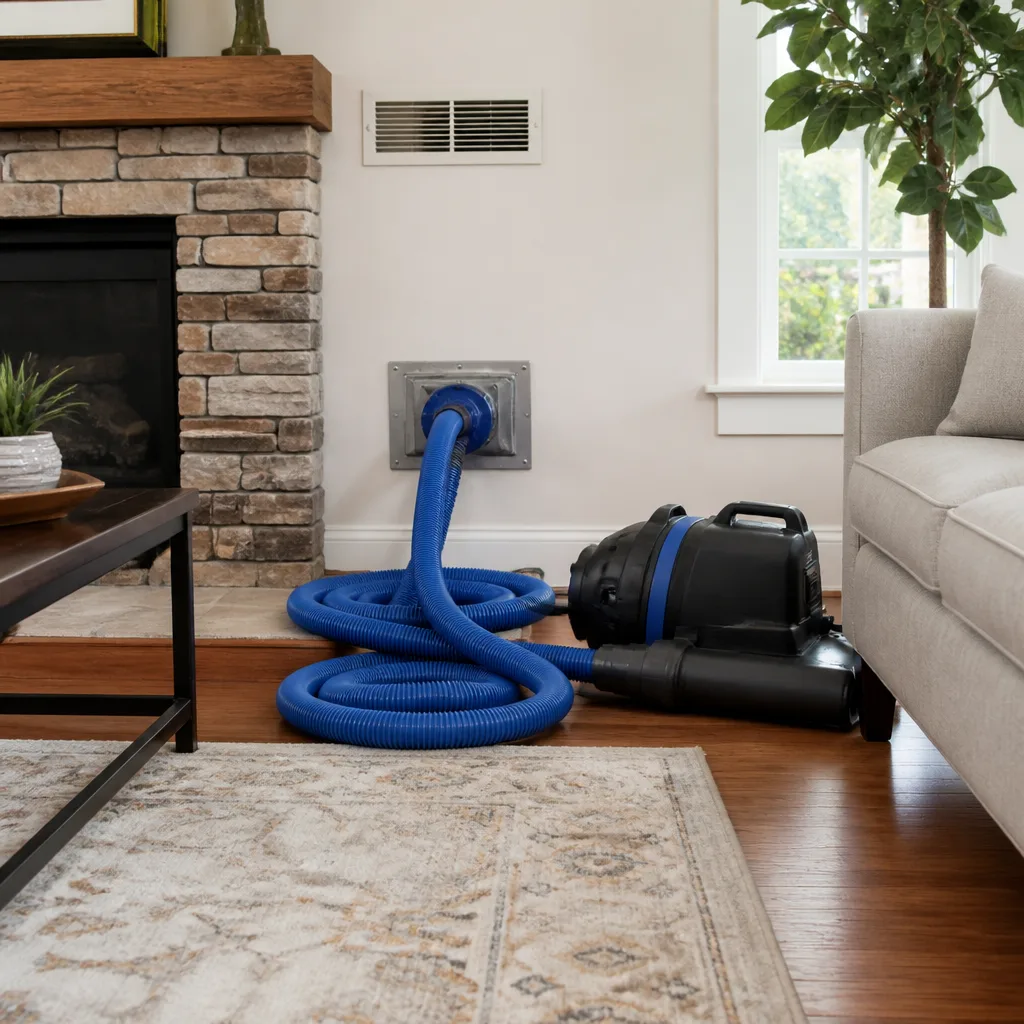 Whole-home duct cleaning
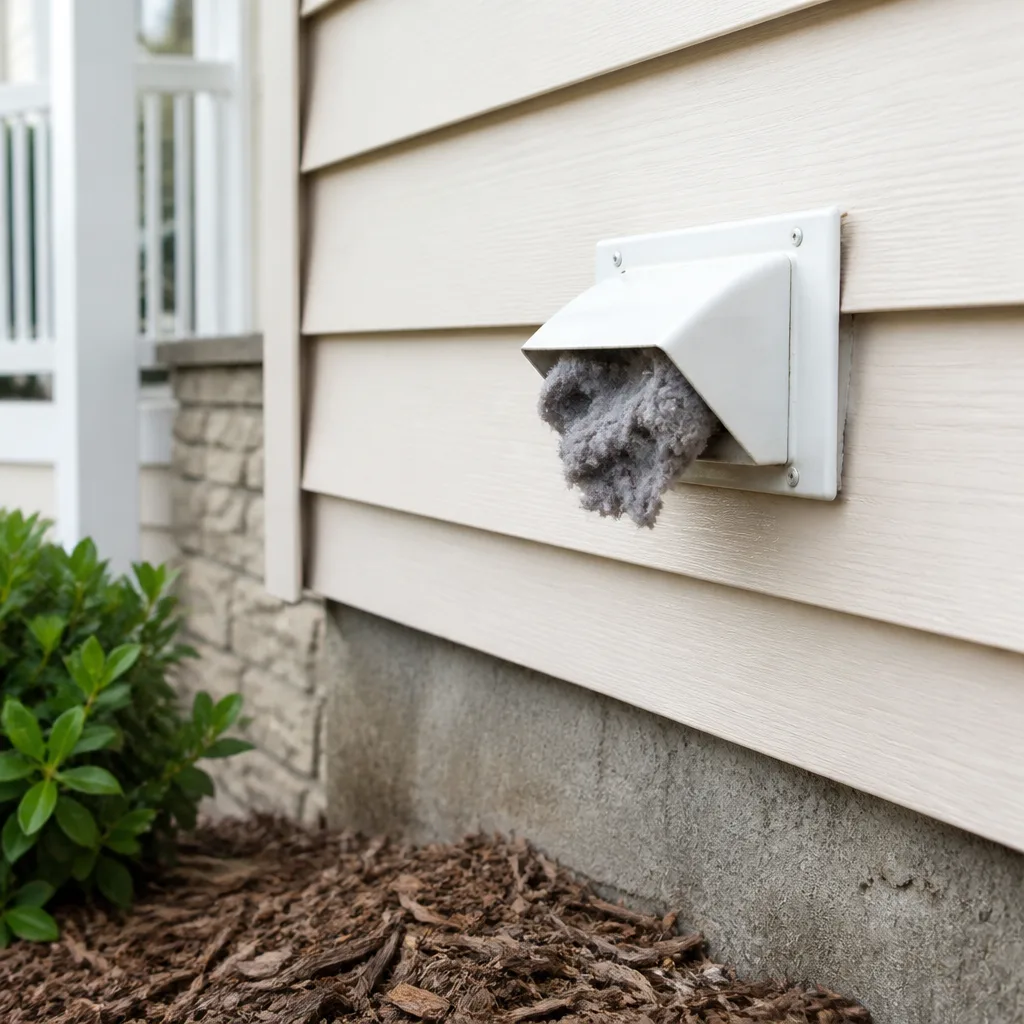 Dryer vent cleaning
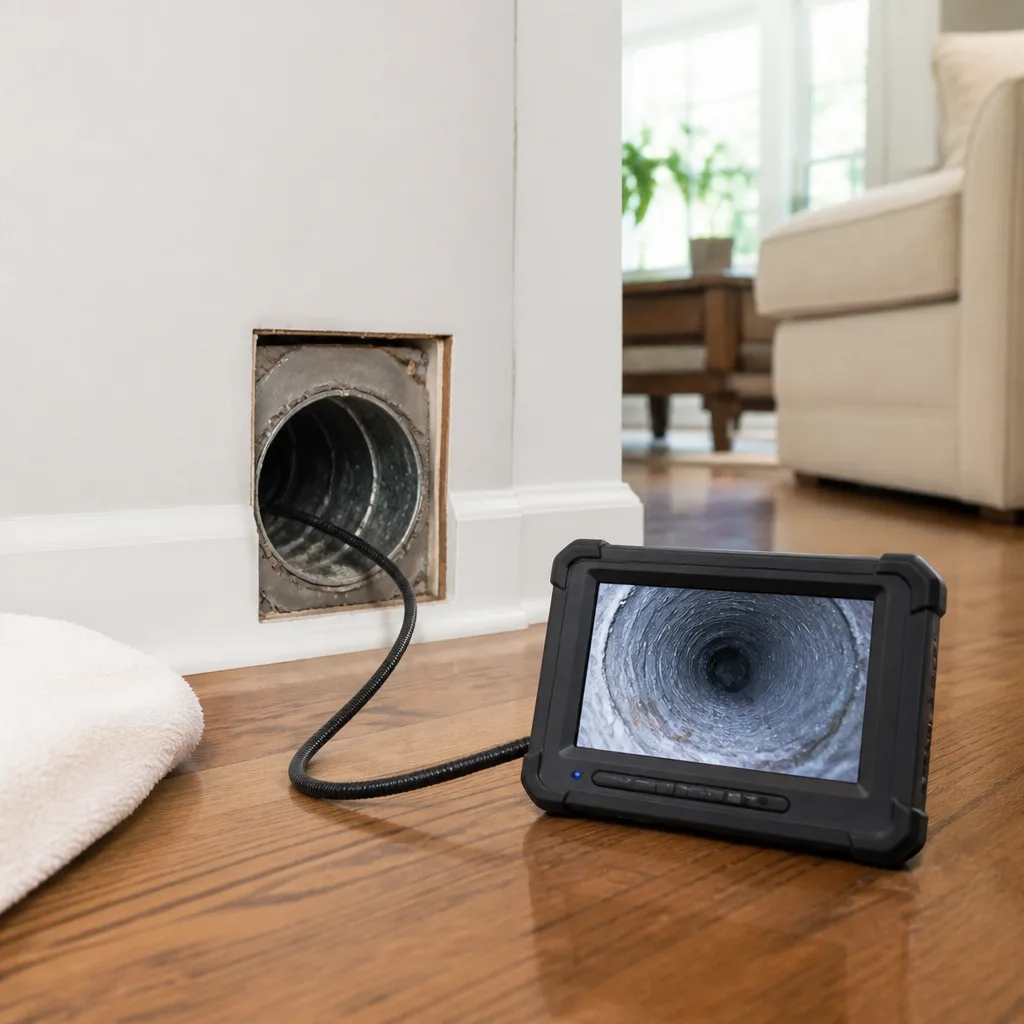 Camera inspection
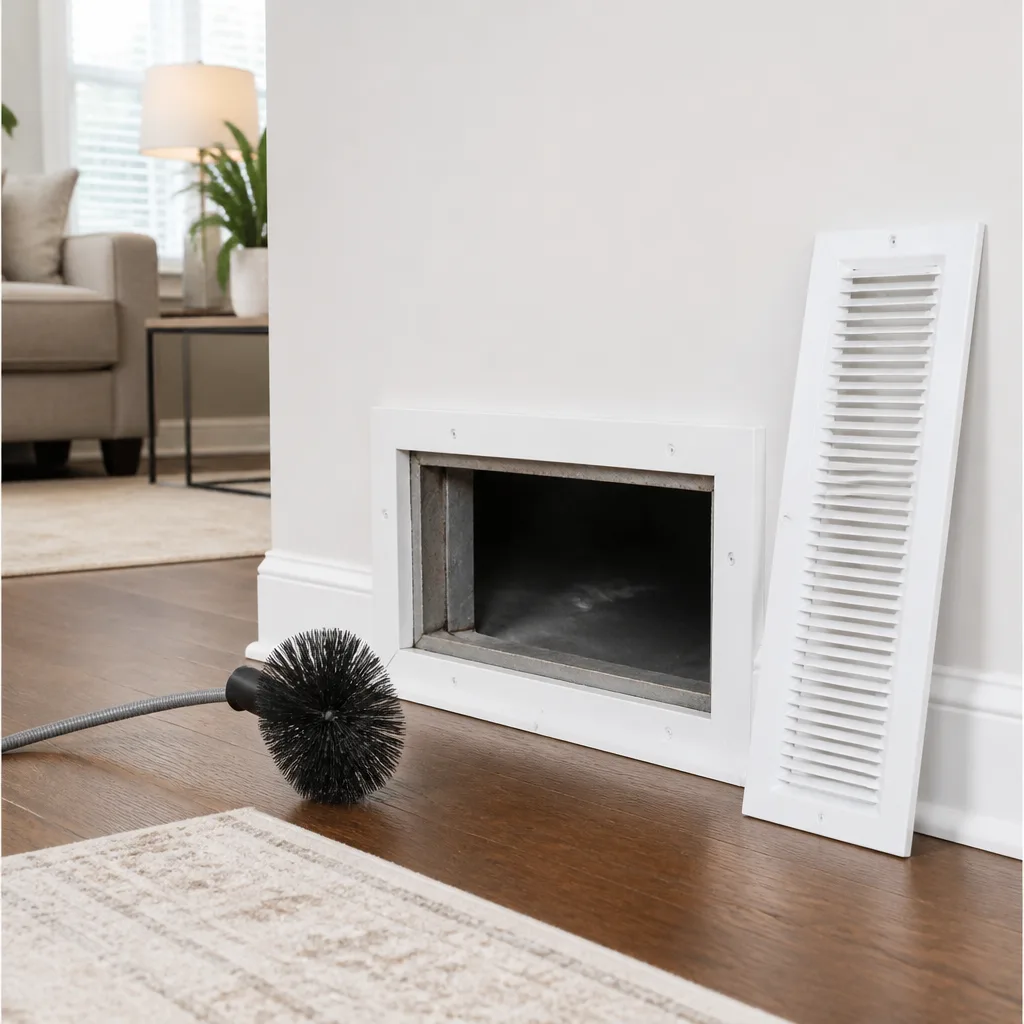 Sanitizing & deodorizing
Whole-system duct and dryer vent check with before-and-after photos - you see exactly what came out of your vents
That "$99 whole-house special" is a bait ad - the real number appears once they are in your hallway, or the "clean" is a shop-vac at the register. We photograph the inside of your ducts before and after instead.
Air Duct Cleaning Emergency Preparedness Guide for Brea Homes
Most Brea homeowners think about their ducts after a fire, a quake, or a water leak has already happened. That’s backward, and it’s the reason so many systems end up contaminated long after the event itself is old news. Wildfire smoke doesn’t just pass through your home; it leaves a fine residue that settles on duct liner and insulation, and a routine vacuum can stir that residue back into every room. Earthquakes shake loose the flex duct connections hidden above ceilings. Water intrusion wets duct liner and starts a clock you can’t see. This guide covers the three emergency scenarios that actually hit Brea, the specific actions to take in each, and the prep work you can do now that makes everything faster and cheaper later.
Quick Answer
After a wildfire smoke event, a nearby earthquake, or water intrusion in your home, the right move is to stop running the HVAC system until the ducts can be inspected, and to prioritize a full-system inspection over a quick vent vacuum. A proper emergency response includes negative-pressure extraction, inspection of accessible plenum and flex duct connections, and antimicrobial treatment when moisture is involved. Prepping now means photographing your duct access points, documenting the system layout, and keeping a service record ready for insurance.
Styles & brands we work with
- Whole-home duct cleaning
- Dryer vent cleaning
- Camera inspection
- Sanitizing & deodorizing
Table of Contents
- Wildfire Smoke: The Protocol for Brea Homes
- Earthquake Preparedness for Duct Systems
- Water Intrusion and the 48-72 Hour Window
- Emergency Duct Cleaning vs. Routine Cleaning
- Insurance Documentation: Getting It Right the First Time
- What to Prep Right Now (Before Anything Happens)
- Your Post-Event Action Checklist
- When to Call a Professional
Wildfire Smoke: The Protocol for Brea Homes
Brea sits inside a high wildfire interface zone, which means smoke events aren’t hypothetical here. When a fire burns anywhere in the hills above the 57 corridor or the Chino Hills, particulate drifts into the valleys and settles into homes. What a lot of people don’t realize is that wildfire smoke is not like regular dust. It carries fine ash and oily combustion byproducts that cling to interior surfaces, including the inside of your duct system.
Here’s the protocol we walk Brea homeowners through during a smoke event.
- Shut the system down. If smoke is visibly thick outside and your HVAC is running on a fresh-air intake cycle, turn the system off. Running it pulls outside air into the return and pushes it through the entire duct run.
- Close windows and set the thermostat to fan-off. Let the home sit. Air movement through the ducts during a heavy smoke peak just redistributes what’s already coming in.
- Wait until the smoke event clears before running the system again. The rule of thumb is 24 to 48 hours after the sky clears and the air quality index has dropped, but a full inspection is the only way to confirm whether the ducts took on contamination.
- Don’t run a “cleaning” cycle first. If the duct liner is coated in smoke residue, a weak vacuum just lifts it back into the air. Proper extraction needs negative pressure.
The difference between a smoke-contaminated system and a normally dirty one is not volume; it’s character. Smoke residue is a slick, dark film that coats the liner and flex duct interior walls. A routine cleaning that brushes and vacuum-cases the system won’t remove the oily film, and it will leave the odor behind. Emergency response to a wildfire smoke event means full extraction with commercial-grade equipment, then a sanitizing treatment on the liner and plenum interior.
Earthquake Preparedness for Duct Systems
Brea sits on the northern edge of the Puente Hills and near the Whittier fault corridor. A quake in this area shakes the home hard and long enough to loosen the mechanical connections where flex duct meets the plenum, and where flex duct meets the register boots. Those connections are taped, sometimes clamped, and often hidden above ceilings, in the attic, or in the interior walls. The damage doesn’t always announce itself.
What a quake actually does to a duct system
- Loose flex duct at the plenum collar. The tape gives first. Then the duct sags or separates, opening a gap where the system pulls unconditioned air from the attic or crawlspace.
- Displaced register boots. A metal boot can shift against the drywall and open a gap around the perimeter, letting air escape into the wall cavity.
- Cracked rigid duct seams. Less common in residential flex, but any rigid sections in the attic or garage soffit can develop stress cracks.
- Dislodged insulation. The duct insulation sleeve can tear where it meets a fitting, exposing the liner and reducing efficiency.
How to check accessible sections post-quake
- Turn off the HVAC system at the thermostat before opening anything.
- If you have attic or crawlspace access, look at the connection points where flex duct meets the plenum and where it meets each register boot. You’re looking for tape that has let go, sagging sections, or visible gaps.
- Inside the home, look at the register grilles. If a grille is loose or sitting proud of the wall or ceiling, the boot behind it has probably shifted.
- Check for debris or dust that has puffed into the room through a register since the quake.
- If anything looks wrong, call for an inspection before running the system. Running a system with a separated flex duct pulls attic dust, insulation fibers, and whatever else is up there directly into your living room.
What we look at during a post-quake inspection is the entire accessible duct run, not just the obvious connection points. From there, the answer is usually a repair and reseal job, which is one of our standalone services for exactly this reason: we can find the gap, fix it, and seal the system in one visit, without you tracking down a second contractor.
Water Intrusion and the 48-72 Hour Window
Water is the most urgent of the three scenarios. A duct system that stays dry for years is fine. A duct system that gets wet starts a mold colonization clock, and the window for intervention before it accelerates is 48 to 72 hours. This is not a reason to panic; it’s a reason to call quickly.
How water gets into ducts in a Brea home
- Condensation line failure. The line that drains condensation from the air handler can clog or crack, sending water into the drain pan and out onto the duct connection and floor. This is the most common cause of wet duct liner in Brea homes.
- Standing water near a register. A plumbing leak, slab leak, or overflow that pools near a floor register can wick moisture up into the duct boot and the liner beyond it.
- Roof or attic leaks. Whether from rain during a winter storm or from an HVAC condensate line running through the attic, moisture reaching the flex duct insulation starts the same clock.
- Appliance overflow. Water heater failures and washing machine overflows anywhere near a duct run are worth checking.
What to do in the first 48 hours
- Stop running the HVAC system. A wet duct with a running fan spreads moisture and mold spores through the entire home.
- Cut the water source if it’s a plumbing or appliance issue.
- Photograph the wet area and the register. You’ll need it for insurance.
- Call for an inspection. Emergency response to water intrusion means extracting standing water from the duct system, drying the liner, assessing damage, and then applying an antimicrobial fogging treatment to the affected sections.
- Document everything: dates, times, what you saw, what was wet, who you called.
Once mold colonizes duct liner, the remediation is much larger and involves replacing the liner in the affected sections, not just cleaning it. That’s why the 48-72 hour window matters. The goal isn’t just clean ducts; it’s stopping the mold growth before it spreads past a fixable point.
Emergency Duct Cleaning vs. Routine Cleaning
A routine air duct cleaning visit and an emergency response after a smoke event, quake, or flood are different jobs. They share equipment, but the sequence, the extraction method, and the documentation are not the same. Understanding the difference helps you know what a proper response actually involves.
Routine cleaning
Routine cleaning is a scheduled maintenance job. We set up negative pressure at the main trunk, use a Rotobrush or Nikro system to agitate and extract debris from the full duct run, clean the registers and grilles, and photograph the before and after. It’s thorough, but it’s designed for accumulated household dust, not for post-event contamination.
Emergency cleaning
Emergency response adds several steps that routine cleaning skips.
- Expedited negative pressure setup. The negative pressure system is brought online fast, before any brushing, so smoke or mold particulate is captured from the first minute rather than lifted into the air.
- Full system assessment before extraction. We check for separated flex duct connections, wet liner, and other physical damage before we start, because cleaning a system with a gap in it just vents contamination into the attic.
- Antimicrobial fogging protocol. After extraction, we apply an antimicrobial treatment to the liner, plenum, and accessible duct interior. This is the step that addresses smoke odor and mold spores, and it’s not part of a routine cleaning.
- Deodorizing treatment for smoke events. Wildfire smoke leaves an oily film and a lingering odor that needs a dedicated treatment beyond the antimicrobial fog.
- Post-cleaning verification. Before-and-after photos of the duct interior, not just the registers, so you and your insurer have documented proof of the condition.
- Insurance-ready reporting. Written documentation of the pre-cleaning condition, the work performed, and the materials used, structured for a claim.
For water intrusion, we also integrate drying equipment and may recommend air quality hardware from Honeywell or Aprilaire to help keep humidity in the home in range going forward. Those aren’t part of the response itself; they’re the follow-up that helps the problem not come back.
Insurance Documentation: Getting It Right the First Time
The single biggest reason a duct cleaning claim gets delayed or denied is poor documentation. Insurers don’t need a long report; they need specific evidence that the damage exists, that it’s from a covered event, and that the remediation is appropriate. Here’s how to structure it.
What to gather before you call anyone
- Photos of the home before the event. If you have them, they show the baseline. If you don’t, take a full walkthrough now, room by room, of every register and return you can see.
- Photos of the damage. Wet areas, smoke-darkened registers, displaced boots, visible duct tears. Get close enough that a stranger can see the issue.
- A short timeline. Written dates and times: when the fire started, when the smoke reached your area, when you noticed the water, when you turned off the system.
- Your system layout document. This is the one most homeowners don’t have, and it’s the one that speeds everything up the most.
What your contractor should provide
- A written scope of work describing exactly what was found and what was cleaned, dried, sealed, or treated.
- Before-and-after photos of the duct interior, labeled with the date and location.
- A materials and equipment list naming the equipment (Rotobrush, Nikro) and the treatment products used.
- A final invoice that matches the scope of work line for line.
- Any product data sheets for the antimicrobial treatments or air quality hardware, especially names like Abatement Technologies or Guardsman products.
We provide all of this by default on emergency jobs in Brea, and we can structure the report to your insurer’s preferred format on request. Before work starts, we establish one flat price per system in a written estimate, so you’re not guessing what the final invoice will look like when you submit it.
What to Prep Right Now (Before Anything Happens)
Prepping for a duct emergency takes about thirty minutes and saves hours when something actually happens. Whether the next event is a wildfire smoke weekend or a quake you feel in the middle of the night, having this file ready makes everything faster.
Step 1: Photograph every duct access point
Find every register, return, and access panel in the home. Take a photo of each one showing its position in the room, then a close-up. Store them in a folder in your phone or cloud drive named something you’ll remember, like “Duct system – Brea home.” This is the file you’ll hand a contractor or your insurer.
Step 2: Document the system layout
Sketch or annotate a rough layout of the home with each register and return marked, plus the location of the air handler and the main trunk if it’s accessible. You don’t need engineering precision. A hand sketch photographed into the same folder is enough.
Step 3: Photograph the air handler and plenum connections
The plenum is where the main trunk meets the air handler. If you can access it, photograph the connections. Post-quake inspection is much faster when you have a pre-quake baseline of what the tape and flex duct connections looked like.
Step 4: Keep a service record
Save every invoice and inspection report from past HVAC cleaning or duct work. When an adjuster asks when the system was last serviced, you have a document with a date on it. It also makes the assessment faster for any contractor trying to figure out what’s been done and what hasn’t.
Step 5: Book a routine cleaning before the event
A system that’s clean when a smoke event hits has a much smaller contamination load to deal with afterwards. The single best emergency prep for a Brea home is a scheduled cleaning during the months when air quality is good. It also gives you a natural “before” photo set for the future.
Your Post-Event Action Checklist
When something actually happens, this is the sequence. Save it.
- Stop the HVAC system. Thermostat to off. Don’t run the fan.
- Address the source. Close windows during a smoke event. Cut the water during a leak. Inspect accessible duct sections after a quake.
- Photograph everything. Every register, every visible issue, and a quick walkthrough with video.
- Note the timeline. When the event started, when you noticed the problem, when you shut the system off.
- Call for an inspection. Not a cleaning. An inspection first, so the scope of work matches the actual condition.
- Get the written scope and flat price. Before work starts, with any before-and-after photo agreement in writing.
- Schedule the cleaning. Emergency extraction, antimicrobial fogging where needed, and a post-cleaning photo record.
- Address the follow-up. Repair and sealing if the quake opened connections. Air quality hardware like an Aprilaire filtration unit if the home has a chronic smoke or moisture issue.
- Submit the documentation to insurance. With the scope of work, photos, and final invoice together.
Two of the five core services we offer are named specifically because of this sequence: Duct Repair & Sealing and Air Quality & Sanitizing. They exist because emergency response rarely stops at cleaning. A quake opens connections that need sealing. A smoke event leaves a residue that needs sanitizing. A water event leaves humidity that needs long-term filtration. One contractor handling the whole sequence means you’re not coordinating three separate companies during a stressful week.
Common Mistakes to Avoid
- Running the HVAC system right after a wildfire smoke event. The particulate is already in the return air. Running the fan distributes it through every room in the house. Wait until the system has been inspected.
- Booking a “vent vacuum” instead of a full-system cleaning. A quick register vacuum doesn’t touch the plenum, the trunk line, or the flex duct interior where the smoke residue actually lives. Nothing is gained except a satisfied invoice.
- Ignoring the attic after a quake. The visible registers look fine; the flex duct connection at the plenum has a gap the size of your finger. Insulation and attic dust get pulled into the living space every time the system runs. Check accessible sections.
- Waiting past the 48-72 hour window on water intrusion. Moisture in duct liner is not a “wait and see” situation. By the time you smell it, the mold has already colonized the liner.
- Not taking before-and-after photos of the duct interior. If you don’t have documented proof of the condition before and after, an insurance claim is a conversation rather than a claim. Ask for photos of the duct interior, not just the registers.
- Skipping the documentation file until after an event. Trying to photograph “before” state after the fire has already sent smoke into the home doesn’t work. Build the file now, in thirty minutes.
- Assuming a cheap quote is the same job. A quote that skips antimicrobial treatment, skips the plenum, or skips the photo record is cheaper because it’s a different scope. For emergency response, the scope and the price go together.
See the difference
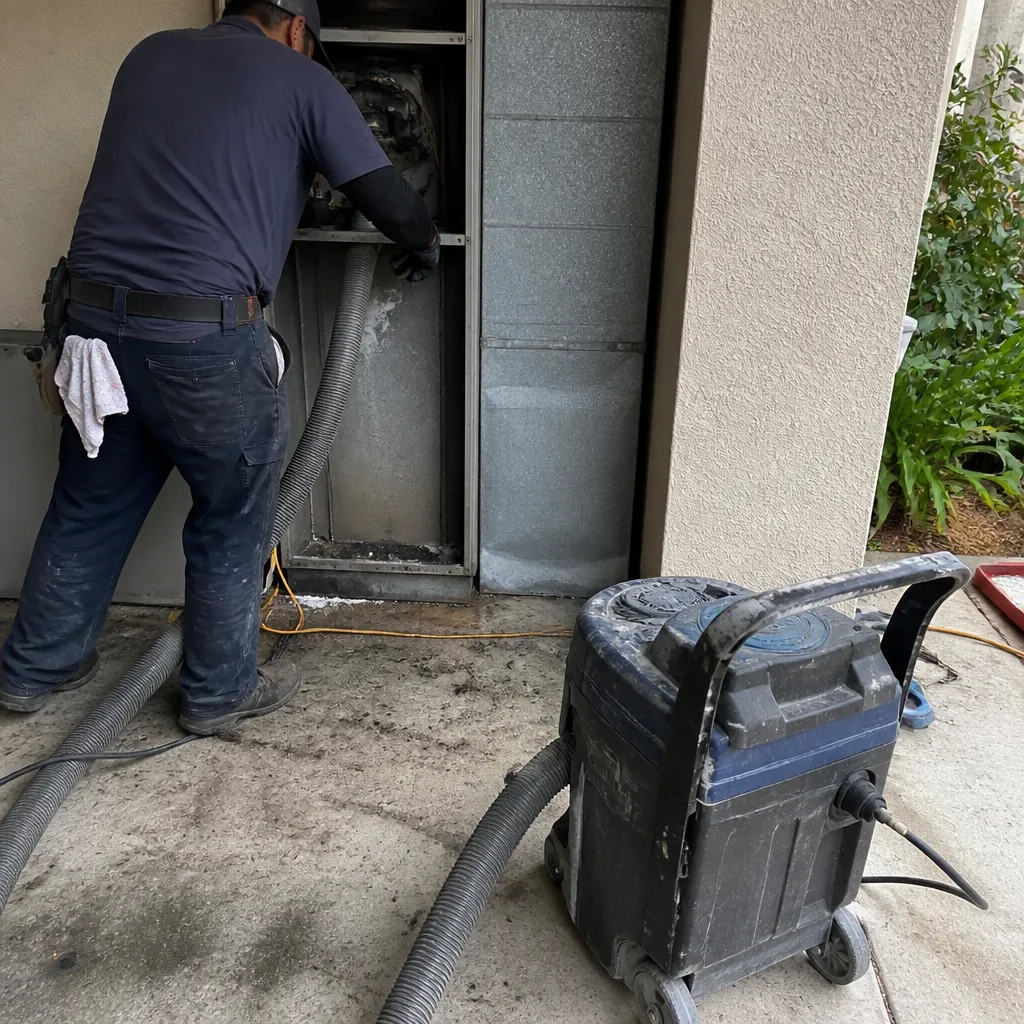 Before
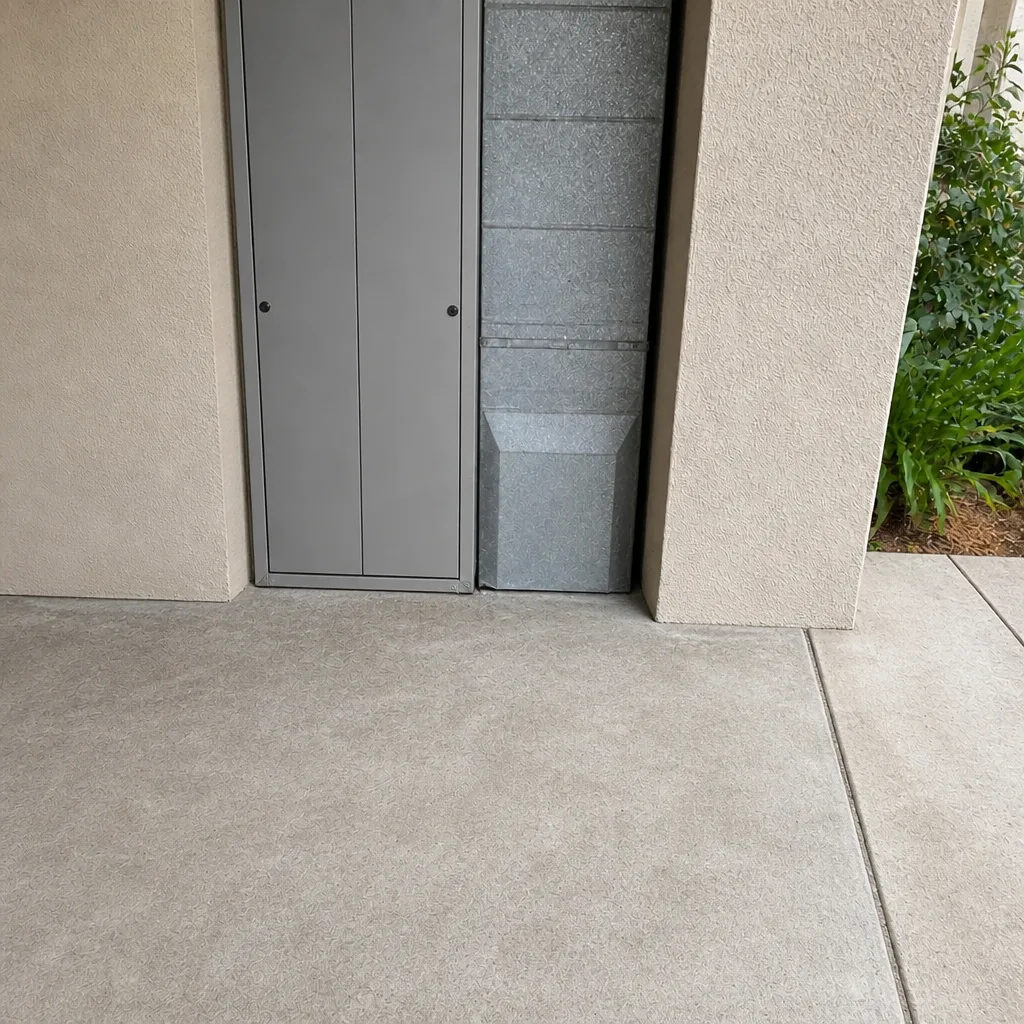 After
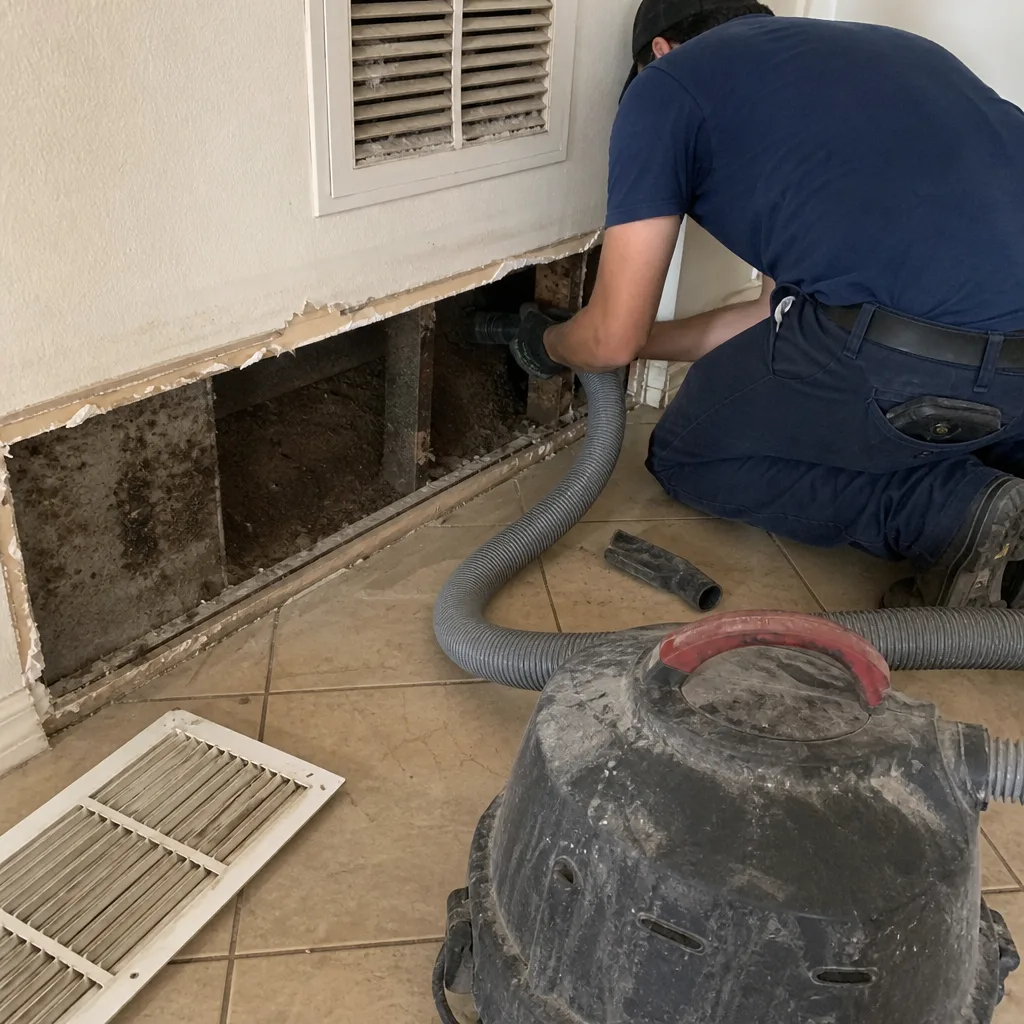 Before
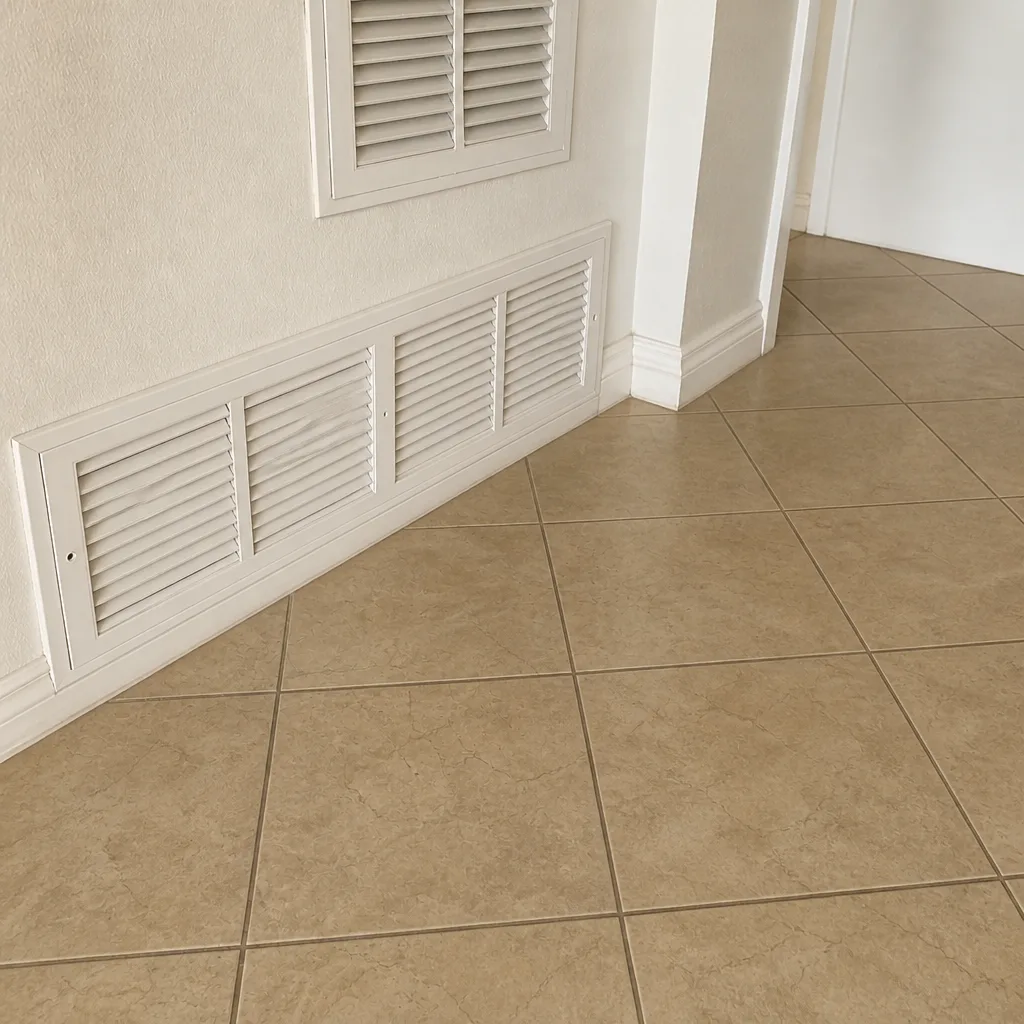 After
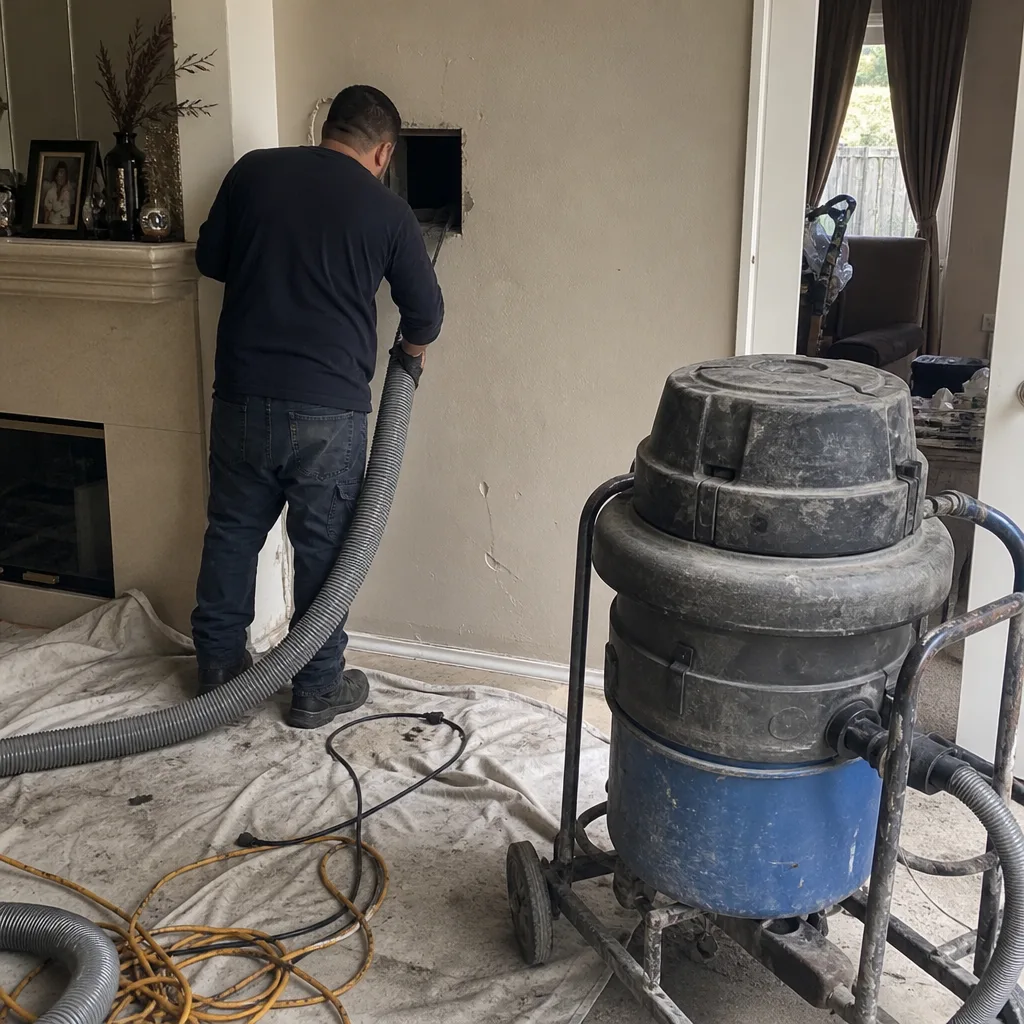 Before
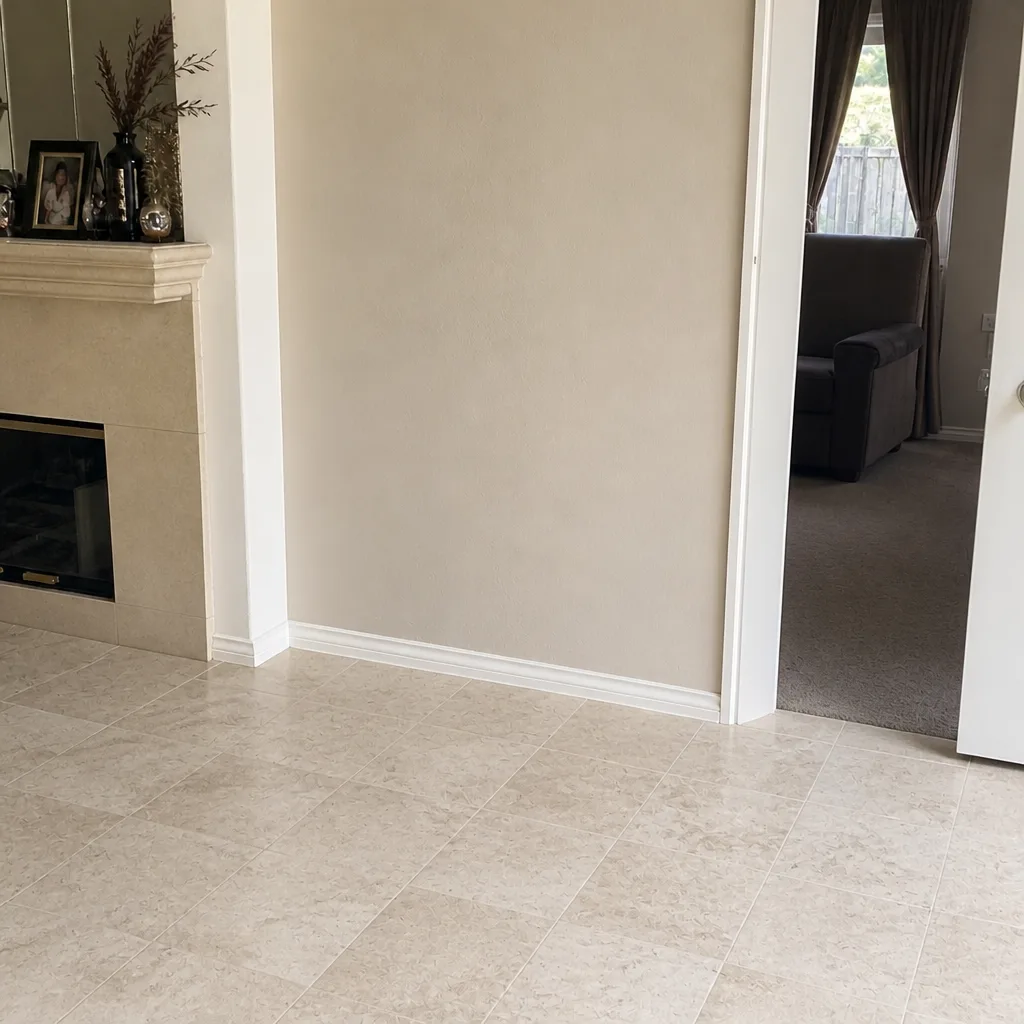 After
When to Call a Professional
Call for an inspection if any of the following is true: your home is in an area affected by a recent wildfire smoke event, you felt an earthquake strong enough to move items on shelves, you’ve had water intrusion near a register or the air handler in the last 72 hours, or you noticed dark film inside a register grille or flex duct. Also call if the system has started to smell musty after a rainy stretch, or if you’ve noticed visible dust puffs from the registers since an event.
Routine cleaning has a different trigger: it’s a scheduled job on a multi-year cadence, ideally when the air is clear and there’s no active event. If you don’t know when your system was last serviced, an inspection is worth scheduling.
Brea Air Duct Cleaning Pros offers free estimates in Brea and can inspect, clean, repair, seal, and treat the same system in one visit. Call (866) 947-9306. We answer 24/7. Fast dispatch from 7am to 7pm, Sunday through Friday.
Frequently Asked Questions
Wait at least 24 to 48 hours after the smoke has cleared and air quality has dropped back to normal, and get an inspection before you run the system for the first time. The wait isn’t a magic number; the inspection is what confirms whether the ducts actually took on smoke contamination. If you smell smoke inside the home when the system runs, stop the system and call for an inspection.
Not on its own. Wildfire smoke leaves an oily film on duct liner and flex duct walls, and a routine cleaning won’t remove it or the odor. Emergency response uses negative-pressure extraction plus antimicrobial fogging and deodorizing treatment to address the residue. If a contractor offers you a standard vent cleaning as a wildfire smoke response, ask exactly what treatment they’ll apply to the liner.
Check the accessible flex duct connections at the plenum and at each register boot, and have them inspected professionally if anything looks loose or displaced. From inside the home, look for loose register grilles, visible gaps around the boot, or dust puffs at the register when the system turns on. If you’re not sure, turn the system off and schedule an inspection before running it again.
Within 48 to 72 hours, and sooner is better. Wet duct liner is where mold starts, and the remediation for colonized liner is much larger than the remediation for wet liner. Turn off the HVAC system, cut the water source, photograph the area, and call for an inspection. The window is the difference between drying and replacing.
It depends on your policy and the cause of the damage. Wildfire smoke, earthquake, and water intrusion are typically handled differently by different carriers, and earthquake coverage is almost always a separate rider in California. The documentation you provide decides how smoothly the claim goes. Structured scope of work, dated before-and-after photos, and a materials list make the difference.
Emergency response is priced per system, not per vent, and the exact figure depends on the type of event, the size of the system, and whether repair, sealing, or antimicrobial treatment is needed. We give one flat price per system in a written estimate before any work starts, and we take before-and-after photos of your own ducts. Call (866) 947-9306 for an exact quote – estimates are free.
We handle the full duct system lifecycle in one visit: cleaning, dryer vent safety, dryer vent cleaning, repair and sealing, and air quality treatment. We use Rotobrush and Nikro equipment and install recognized air quality products from brands like Honeywell, Aprilaire, and Abatement Technologies. That means the leak we find during cleaning gets sealed the same day, and the smoke treatment gets applied without a second contractor call.
The Bottom Line
Brea’s position on the wildfire interface and near active fault corridors means duct emergencies here are not a matter of if but how well you’re prepared. The three scenarios that matter are wildfire smoke, earthquake damage to flex duct connections, and water intrusion in the first 48 to 72 hours. Each one has a specific protocol, and none of them are solved by a routine vent vacuum. Prep now: photograph every register, document the system layout, save your service records. When something does happen, stop the system first, photograph everything, then call for an inspection. One flat price per system, agreed before work starts, with before-and-after photos, is the baseline you should expect from whoever responds.
Call (866) 947-9306. We answer 24/7. Fast dispatch from 7am to 7pm, Sunday through Friday. Estimates are free.
Written by the team at Brea Air Duct Cleaning Pros.